Web Articles Digital Invoice
2021/06/20
What is Electronic Invoice? What is Peppol? The latest trends and the benefits they bring are explained in an easy-to-understand manner.
From October 1, 2023, the qualified invoice storage system (so-called "invoice system") will start. The Digital Invoice Promotion Council "EIPA" was launched in conjunction with this change, and EIPA has announced that it will establish a standard specification for electronic invoices in Japan in accordance with the international standard "Peppol," which has been widely covered in the news. In this issue, we will explain in an easy-to-understand manner what "electronic invoicing" and "Peppol" are and what benefits they will bring to accounting operations, from the latest trends to future plans.
Table of Contents
What is electronic invoicing?
First of all, the definition of electronic invoice refers to the electromagnetic records required to meet the requirements for purchase tax credit under the invoice system (qualified invoice storage method for invoices) scheduled to be introduced on October 1, 2023.
For more information on the invoice system, please click here: [Easy-to-understand explanation] What is the invoice system? What will happen to accounting operations?
The credit for consumption taxes on purchases is a system for calculating how much consumption tax should be paid.
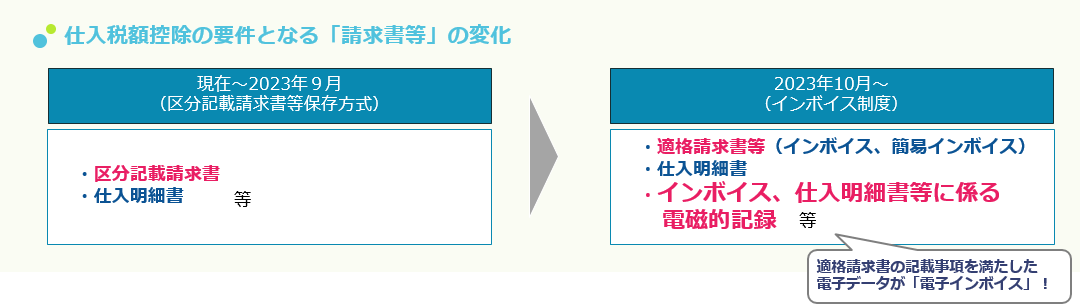
Currently, "separate invoices (= current invoices)" and " purchase invoices" are required in order to deduct consumption tax on purchases.
The electronic invoices and purchase invoices required here are electronic invoices.
What is Peppol?
Peppol" is the standard on which the Japanese electronic invoice is based. Originally introduced as a public procurement system in Europe, it has since been promoted for use in BtoB transactions and is currently used in more than 30 countries.
Peppol was chosen as the standard because of its international track record, among other reasons. As a result of a joint comparison of domestic and international standards by various system vendors, Peppol was chosen for its "high potential to become a global standard in the future due to its international popularity.
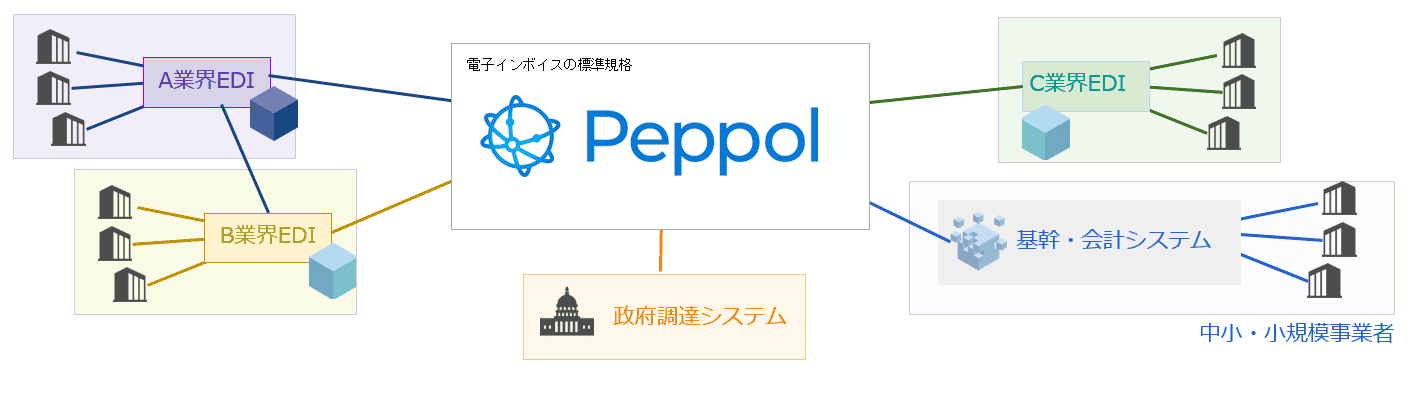
What is expected of Peppol is its role in connecting networks among various companies and industries.
Currently in Japan, different companies and industries use different accounting systems, EDI, etc., so simply converting invoices to electronic form is not enough. However, there are hopes that by connecting these systems and EDI through a common standard called Peppol, it will be possible for different companies and industries, including those overseas, to communicate with each other electronically.
Peppol Network Image]
Four advantages of electronic invoicing
(1) Eliminates the need for invoice payment applications
Currently, when an invoice is received, it must be attached and filed in the accounting system. Even if you receive electronic data such as PDF files via e-mail or the web, it is not always possible to automatically import the data into the system.
However, with electronic invoicing, billing information is sent as electronic data based on a common standard that is standardized throughout Japan, allowing businesses that use different systems to automatically import billing information as invoice payment data, eliminating the need for an application process.
(2) Telework in invoice work becomes possible
Currently, the company receives invoices, and the business must apply for payment based on those invoices. We often hear stories of people having to come to the office because of this.
However, if invoices are sent electronically and in a standardized format, the receipt of the invoice and subsequent invoicing can be completed remotely.
(3) Efficient transactions with overseas companies
Peppol is a common standard that is used in many foreign countries as well. It is also expected to be used in many more countries in the future, and it is being considered so that transactions can be conducted with such overseas companies using the same standard electronic invoices in the future.
Of course, not all transactions with overseas companies will be conducted using only invoices, but it is hoped that the future expansion of electronic transactions will eliminate the complexity of overseas transactions in general.
(4) Significant improvement in the efficiency of payment and cancellation operations
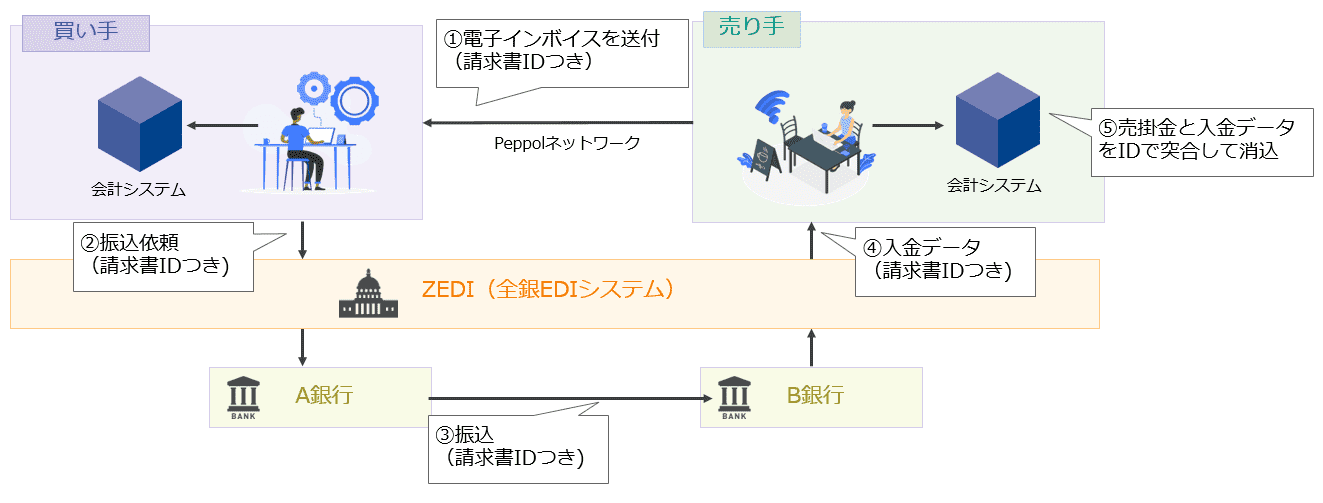
Currently, paper invoices are used between the seller and the buyer, so the seller is not able to accurately recognize which credit has been received.
However, with electronic invoicing, not only some companies but all companies in Japan will use the same standard invoice to conduct transactions. This will make it possible to assign a common standard ID to the invoice and payment information for both the seller and the buyer, making it much easier to match the invoice and payment information in the accounting system.
Image of business operations using electronic invoicing
We will introduce a system that supports electronic invoicing.
However, electronic invoicing is not all that is required to be supported, and there are a wide range of requirements to be met, as described below.
Currently, it is considered necessary to respond to changes in qualified invoices and consumption tax calculations, as well as to comply with common standards such as Peppol. However, it is also necessary for the system to support new requirements that arise as the study progresses.
Works Applications is an official member of EIPA, the Digital Invoice Promotion Council. Therefore, we are able to catch up with the discussions of the EIPA and reflect them in our products as soon as possible. If you are interested, please feel free to Download the Brochure explaining the latest trends.

To request Products / Services, please visit
The information in this article is based on the current situation as of June 14, 2021. The information in this article is based on the situation as of June 14, 2021. The contents may be subject to change in accordance with laws and regulations to be promulgated in the future.
Related Useful Information
White Paper
2026/03/16
Geopolitics of "Digital Invoice" that Accounting Departments Should Know
Web Articles
2025/01/07
Achieving Efficient Business! Points for Introducing a System for Receiving Invoices

White Paper
2024/07/03
Cloud invoice sending/receiving service
Usage Survey Report
Related Case Studies
Nankai Electric Railway introduces HUE DI and upgrades HUE, Building a Management Foundation that Continues to Adapt to Change
Nankai Electric Railway Co.

Peppol streamlines both sending and receiving invoices
HAMASPI Corporation
Works Applications, Inc.