
Offshore Development
Spectee Corporation
Lab-based offshore development service" that overturned the image of "offshore development is difficult" - Doubled development speed and realized business expansion by securing high-level engineer human resources

Spectee Inc. is a disaster prevention tech startup that visualizes and predicts disaster and risk information by using AI to analyze various data sources such as SNS, weather data, car navigation system information, and road and river camera images, with the mission of "making 'crisis' visible. The company is a tech startup that visualizes and predicts disaster and risk information.
Spectee Pro, the company's AI real-time disaster and risk management service, can collect, visualize, and predict disaster and risk information occurring around the world in real time, and is being introduced in a wide range of fields, including local governments, media organizations, infrastructure companies, manufacturers, logistics, and trading companies nationwide. In November 2023, Spectee Corporation will launch a new cloud-based service, Spectee Supply Chain Resilience (Spectee SCR), which addresses supply chain risk management in times of high uncertainty.
Spectee Corporation has started using Works Applications' (WAP) "Lab-based Offshore Development" service in May 2023 to support multi-product development. This article introduces the background leading up to the start of use, the current utilization status, and future prospects.
Challenge: Difficulty in securing domestic human resources and limitations of existing contractors
What was the background to the start of your "lab-based offshore development" service, and what challenges were you facing at the time (2023)?
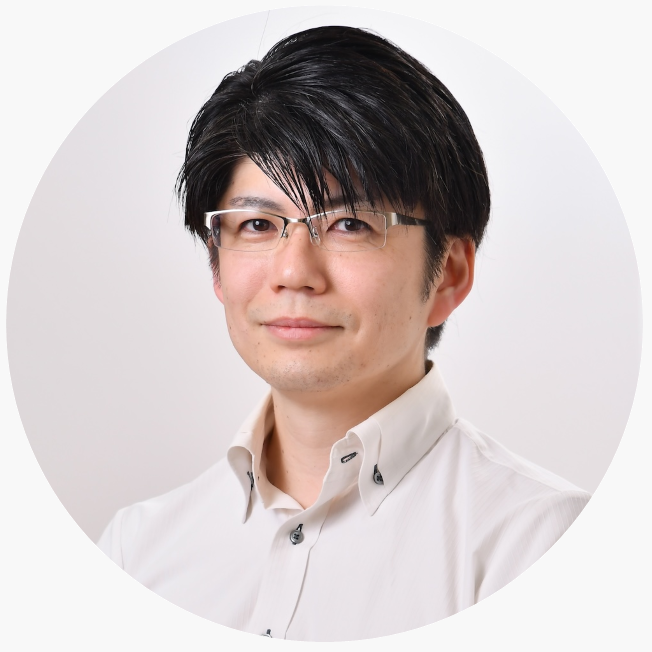
Interview participant:
Mr. Kazumasa Fujita, CTO, Spectee Corporation
It has become difficult to secure engineering personnel in Japan, and we have not been able to keep up with recruitment. However, it was time for us to start multi-product development, and we needed to secure high-level engineering personnel as soon as possible. Customers' expectations for new products were high, and we had a sense of mission to offer functions that would surpass those of existing products.
Although we had several domestic outsourcing deals, when we entrusted them with a certain volume of development, we felt that it was difficult to control the level of the work, or the cost of prior training when working together as a team. When we were wondering what to do, we learned that WAP offered lab-based offshore development services.
Solution: WAP's track record and support system helped them decide to take on the challenge again.
-Did you have experience in offshore development before that?
Yes, it was around 2015-2016 when our company pivoted a bit from application development for the toC market to the toB market. We were short of hands at the beginning of creating the product, so we decided to go for offshore development, but communication did not go well, the quality of the deliverables was not satisfactory, and the product was not what we expected.
That experience gave me an image of "offshore development is difficult," and I began to avoid it. Nevertheless, I decided to give WAP's offshore development services a try because I heard that WAP has been able to handle the package development of its main products well offshore. I thought that perhaps we could leave this to them with peace of mind. Especially the testing part. I was a little worried about the testing process because of the different language, but WAP was able to supervise that part as well, so we decided to start the project.
Key to Success: Three-Point Set of Training System, Follow-Up System, and Scrum.
-What was your impression of the project members?
Since we had been doing Scrum development in our company, we hoped that WAP's offshore development team (hereafter referred to as "WAP India* team") would also use Scrum for their development activities as well. The engineering manager at the time of the start of the project was able to speak English to some extent, and I think we were able to proceed successfully while communicating directly with the WAP India leader.
I had heard beforehand that Chennai, even within India, has many people with a temperament closer to that of the Japanese, and it is true; there are many mild-mannered and serious people. We have daily meetings, sprint reviews, and planning in accordance with the Scrum methodology, and I think communication is smooth.
Also, WAP India has a very good education system, and when our company throws out a problem solution, WAP India's education team follows up on it, which is so great that we feel we have to learn as well. The other thing that I feel is a big difference from past failures is that we have the WAP people in between us, and if there is a slight miscommunication with the WAP India team members, we can immediately consult with them and resolve it.
Effects: Doubled development speed, expanded scope of collaboration, and flexible response capabilities
-Have you experienced any changes as a result of the introduction of offshore development?
At first, we had to figure out how to hand over tasks to the WAP India team, but after handing them over, the development speed was very fast. I think this is a big change because quick front-end development is important to increase customer engagement.
I feel that the development speed has nearly doubled because of the high level of human resources we have here. When outsourcing work in Japan, many of the staff members have worked in other industries, so it is difficult to match their level of experience.
At first, we gave them tasks that focused on front-end functional development, but as they deepened their understanding of the core areas, we gradually expanded their areas of responsibility. The members of WAP India have a style of accepting anything and completing tasks, and I really appreciate their cooperation.
Future Prospects: Utilization as a strategic partner for overseas expansion.
-What are your future plans?
The overall speed of product development has increased, and we have been able to deliver better features to our customers much faster than we had expected. Based on these achievements, we have decided to expand the number of people and teams in WAP India to work on product development with a view to overseas expansion.
We communicated what we were looking for to the WAP India members and asked them to actively participate in defining the requirements, and together we created the product. We thought it would take more time to expand overseas, but WAP India produced higher-than-expected results here, and we were able to provide the Philippine version of the service to our customers earlier than expected.
This has led to a significant impact on our business, and has broadened our thinking and perspectives. As for our future prospects, there are still some measures for overseas markets that we have planned but have not yet started. I am very much looking forward to having the members of WAP India take charge of these areas as well.
Message】Companies suffering from a shortage of human resources should consider offshore development as an option.
-What are your future plans?
In a venture company like ours, we often draw up a model to scale sales by finding new businesses, but in such cases, we are always faced with a choice between multi-product and multi-market.
In such situations, we need to increase the number of our own development team members, but due to the shortage of human resources, it takes a lot of time and power to recruit them. Nevertheless, business requirements are often urgent. Offshore development is truly reassuring, as it allows us to flexibly set up a system and get started even in such a situation. When utilizing overseas personnel, it is very important to have a system in place for training and follow-up when asking them to perform tasks.
In addition, for companies that are considering overseas expansion in the future, it may be a good idea to have a certain amount of experience in offshore development in the domestic business as a preliminary step in anticipation of using the power of offshore development. Of course, it is possible for Japanese members to take charge of products for overseas markets, but there are some linguistic and awareness barriers. In this sense, I can recommend WAP's lab-based offshore development service.
WAP India: WAP's subsidiary, Works Applications (India) Pvt.
This article is current as of May 2025.