
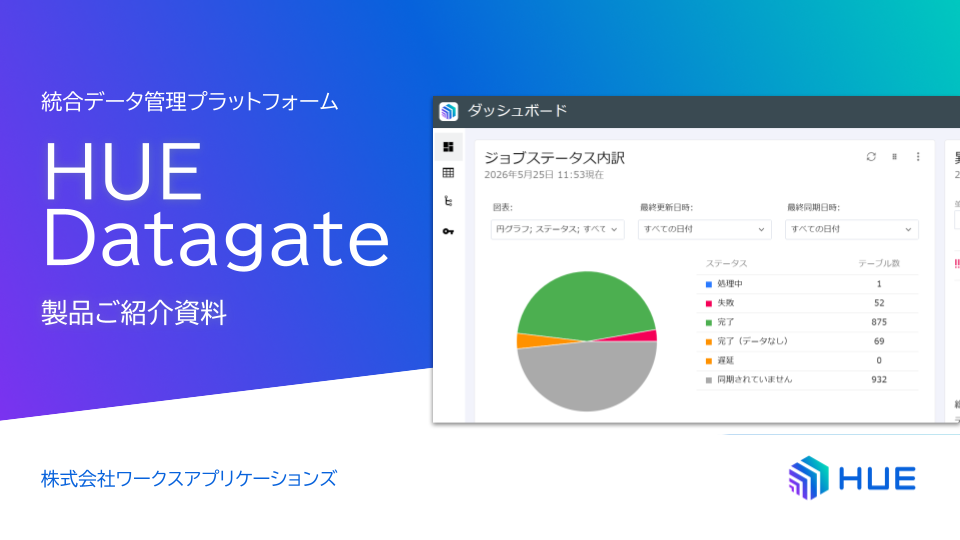
HUE Datagate
Turning scattered data into value.
Data management platform that seamlessly integrates data around ERP
Synchronizes ERP data in real time and integrates data without programming.
HUE Datagate supports enterprise data utilization and facilitates digital transformation (DX).
Three Features of HUE Datagate
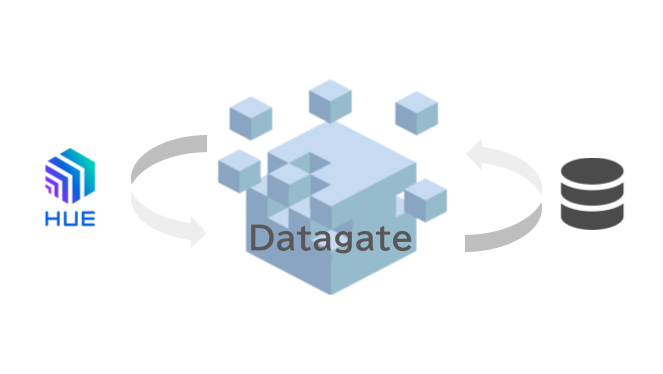
Seamless integration of both HUE data and peripheral data
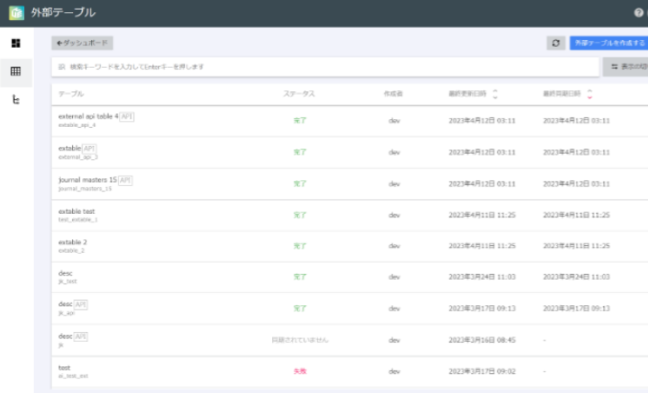
A data management platform that allows centralized management of HUE data as well as data from peripheral systems and web services. HUE updates are synchronized in real time so that the latest information is always available.
Non-programmable
Eliminates attribution and operational costs
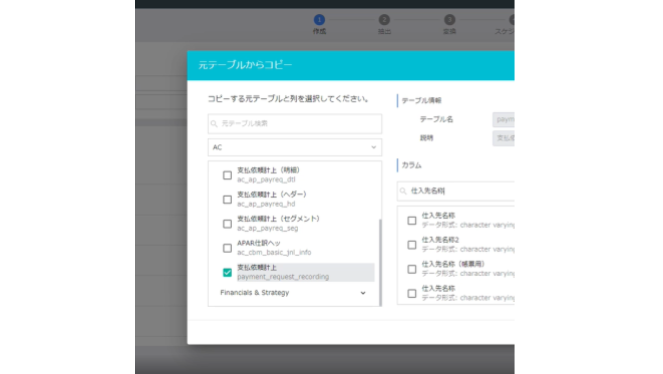
All operations, from data extraction, conversion, and distribution settings to API disclosure, can be completed on the GUI. No programming is required, which requires specialized skills. Prevents data linkage from becoming a black box, greatly reducing the burden on the system department while building a data utilization infrastructure that enables continuous operation.
Connects to any peripheral system,
open platform
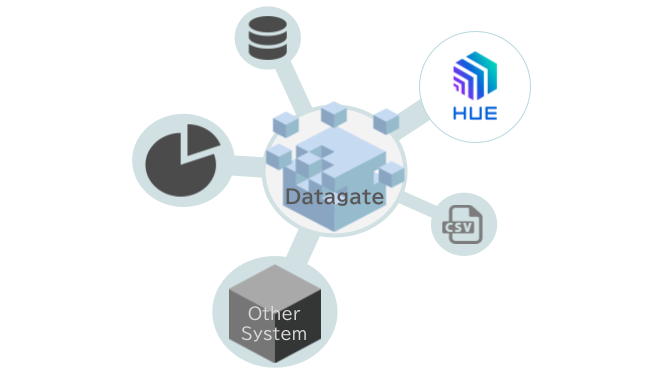
The API disclosure function allows for the consolidation and centralized management of information scattered throughout the company as "usable assets". HUE' s data can also be used as a tool for the management of peripheral data.
rich set of APIs and functions to support data utilization
-
Function 1
Data synchronization with ERP
All data managed within HUE's ERP is synchronized with Datagate in real time.

-
Function 2
API for importing data from peripheral systems
Not only HUE data, but also data from other SaaS and peripheral systems can be imported into Datagate. This provides powerful support for the aggregation of scattered information.
-
Function 3
Data conversion and processing functions
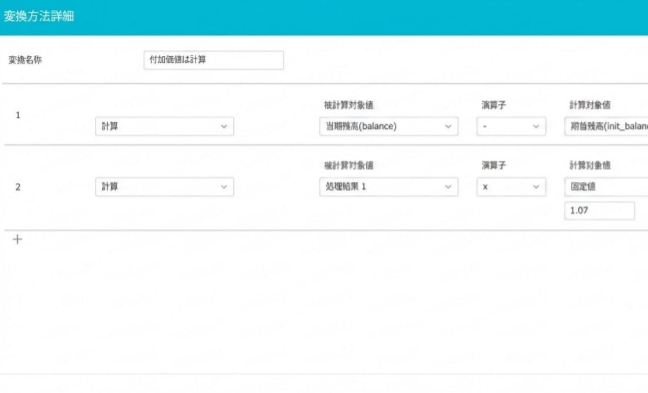
Acquired data can be converted and processed using GUI settings. Non-programmable absorption of differences in data formats such as column mapping, string merging, numerical operations, regular expression replacement, type conversion, conditional branching, etc., which vary from system to system.
-
Function 4
Data publishing API
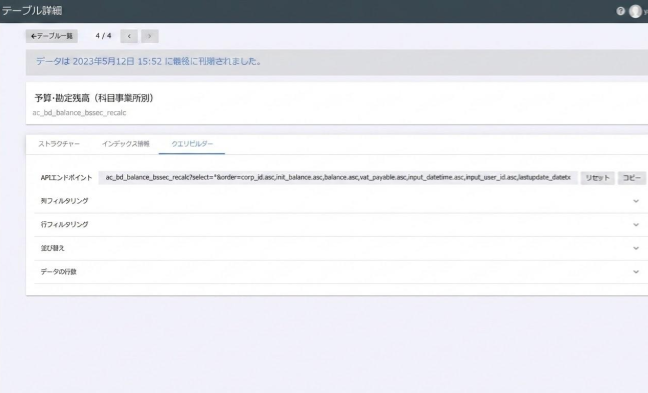
Create API endpoints with no code. Immediately publish collected data to BI and AI tools for real-time utilization.
-
Feature 5
Data workflow management
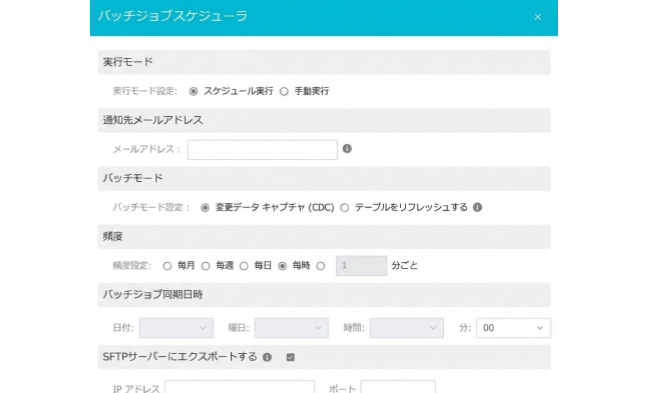
Job execution from data extraction to conversion and distribution can be defined and controlled. Flexible operations are possible by incorporating into existing workflows.
-
Function 6
Status check and log management
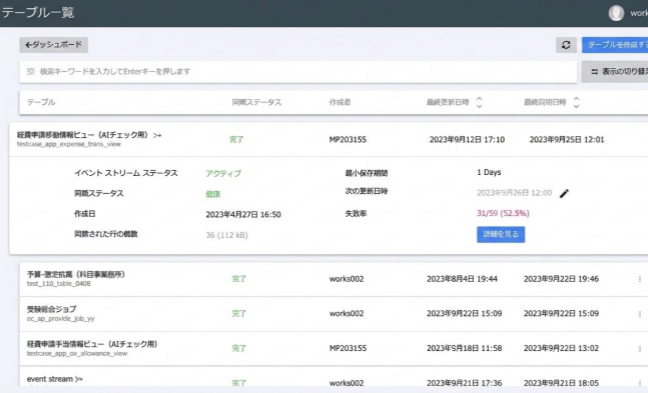
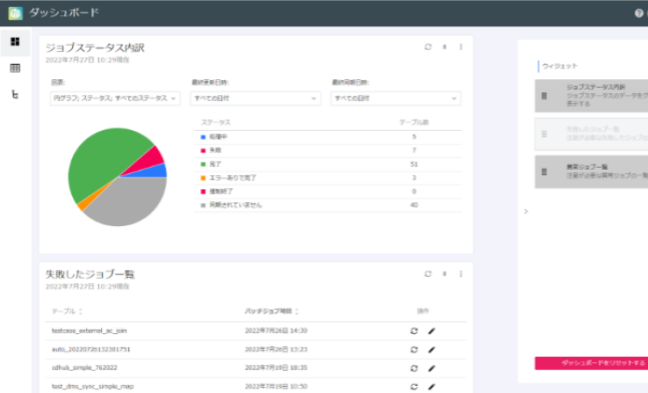
Real-time monitoring of data synchronization and job execution status. Abnormality detection and cause identification are facilitated to support stable operations.
-
Feature 7
Authentication and security management
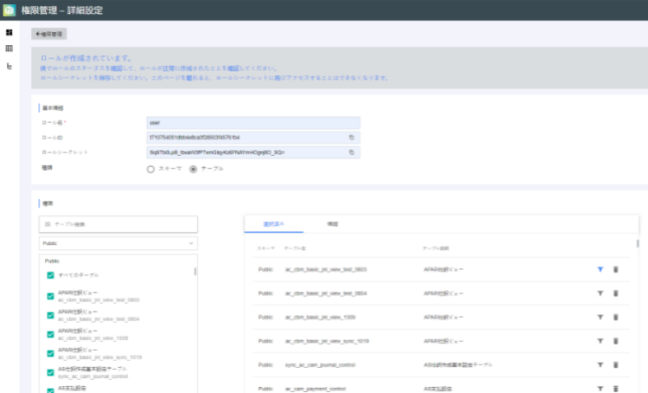
Strict access control and data protection mechanisms are provided. We provide a secure and open external collaboration platform while protecting data.

Download Brochure
Other useful documents
ERP Switchover Case Study Collection for Foreign ERP Version Upgrade
Download Brochure

Other useful documents
Introduction of Cutting-Edge 2-Tier Cloud ERP
Download Brochure

Detailed product information
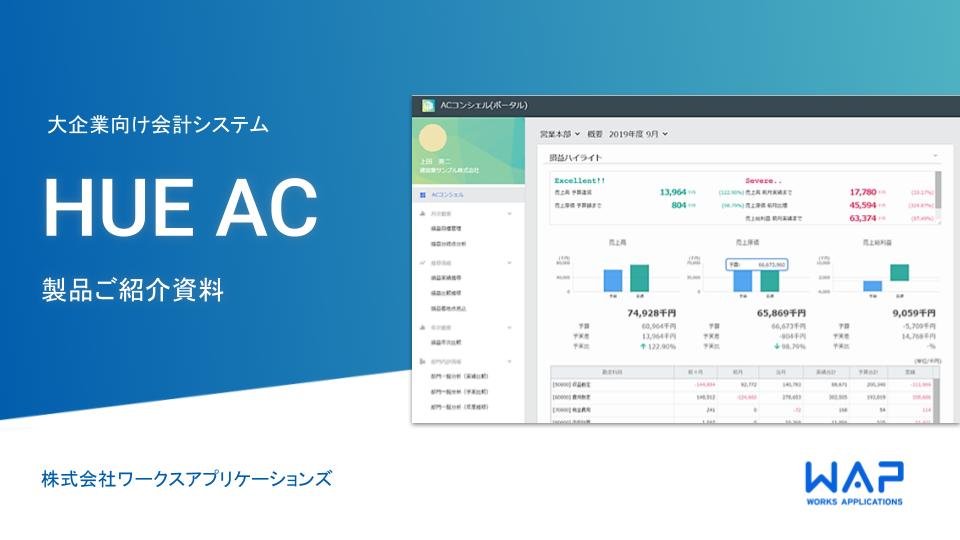
HUE AC introduction materials
Download Brochure
Frequently Asked Questions
-
Can Tableau be integrated with various BI tools?
Yes, it can be seamlessly integrated with popular tools such as Tableau Public, Microsoft Power BI, and Google Looker Studio, allowing for smooth analysis without compatibility issues.
-
Do I get support for using the software?
Yes, we can provide support by professional personnel according to the type of use you wish to make of the service.
For more details, please contact us using the inquiry form. -
How much does it cost?
We offer several plans depending on the scope of use, data volume, and other factors.
For details, please contact us using the inquiry form.
Introduction of Partner Program
WAP works with partners to promote development and service deployment, and has built a system that can respond to a variety of on-site feedback.

Resources
This site provides useful contents for solving issues in each department, such as compliance with legal revisions and system selection.
Please make use of this information when considering the introduction of a system, improving business operations, and solving problems.