Engineers
The SRE department supports HUE from behind the scenes. What are the duties of the professionals who work hard "for the customer"?
SRE's challenge to support the reliability of "HUE
Profile
SRE Engineer
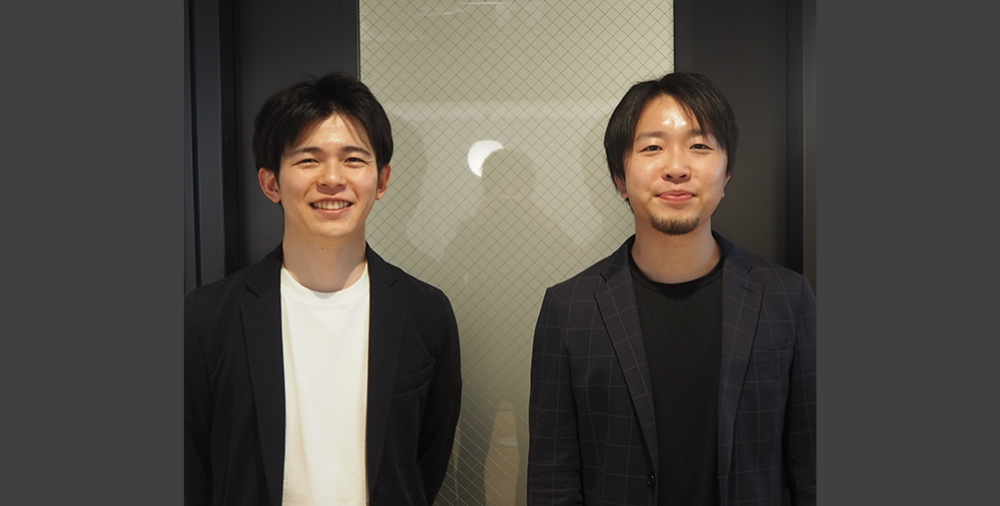
M.T. / M.M.
Release Date : Apr 29, 2023
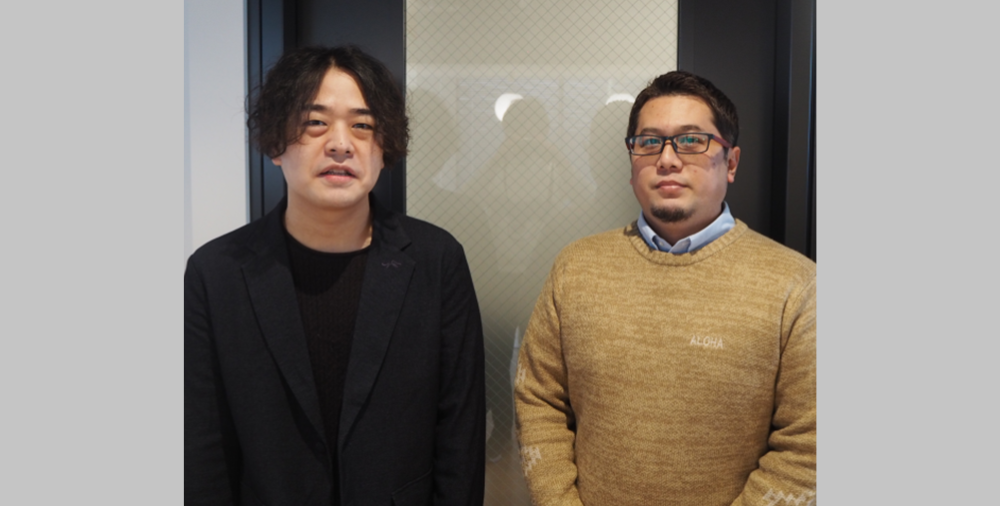
In this interview, we spoke with two managers who are active in the SRE department of Works Applications.
To improve the value and reliability of the system. We do everything we can.
Please tell us about the SRE department you both belong to. In general, what is the role of an SRE engineer?

First of all, SRE stands for "Site Reliability Engineering. The SRE engineer position can be thought of as an extension of an infrastructure engineer who designs, operates, and maintains the infrastructure (infrastructure) such as servers and databases that form the foundation of the system.
Although a bit abstract, the role of an SRE engineer is generally defined as enhancing the value of the company's Products / Services and maintaining and improving the "reliability" of the company's products and services to its customers from the perspective of system administration and service operation.
To fulfill this role, the SRE engineer's work is not limited to the infrastructure area that infrastructure engineers are generally responsible for, but also includes modifying the programs of the system itself, developing monitoring tools to catch any failures, and so on.
Because they are responsible for a truly diverse range of tasks, the specific areas of work vary depending on the products handled by each company and the organizational structure of the company, but I think it is no exaggeration to say that SRE engineers are basically responsible for "all activities necessary to improve the reliability of the system.
What are the duties of the SRE department at Works Applications?
I mentioned earlier that the role of SRE is a bit abstract, "to enhance the value of our products / Services and to maintain and improve the reliability of our customers from the approach of system management and service operation," and that the scope of work differs from company to company and organization to organization. We do not draw a line that says, "This is absolutely what the SRE department does, and we cannot handle any other scope of work. In the case of our company as well, there is no such line.
To give you a rough idea of what we do, the SRE department is in charge of tasks that occur in the process of actually providing the systems created by our engineers to our customers.
For example, we measure and evaluate the service level of the system, perform "CI (Continuous Integration)" to prepare the development environment used by the engineers for system development, "Deploy" to actually run the system developed by the engineers in the production environment so that the customer can use it, and "Reproduction" to ensure that the customer can use the system 24 hours a day, 365 days a year. Monitoring," which is to grasp the status of the system so that customers can use the system without any problems 24 hours a day, 365 days a year.
In addition, the SRE department's role is to determine what tasks are necessary to improve the value and reliability of the system. Each member of the SRE department works on a daily basis to determine the scope of tasks to be handled as an SRE from a wide range of areas, including cost, security, monitoring, and operational development.
The scope of work for SRE engineers is quite broad, isn't it?

That's right. And as M.T. says, there is no absolute definition of "this is what I do because I am an SRE engineer," and the scope of my responsibilities is ambiguous. In our case, in addition to the duties mentioned so far, we also use our knowledge of systems to provide sales support and consultants with implementation and maintenance support. In this way, I believe that our SRE engineers are in a position to be involved with various departments and positions across the board, without being limited by the boundaries of departments and positions such as development, sales, and consultants.
They challenge to solve daily problems with "diverse knowledge and skills" and "never-give-up attitude.
You both serve as managers of your respective teams in the SRE department.
In what M.T. mentioned earlier, you mentioned the process of "deployment," in which the system developed by the engineers is deployed in a production environment so that the customer can actually use it.
To briefly explain the responsibilities of each team, M.T.'s team is in charge of development work, such as writing scripts, as part of the preparation process before deployment. My team is in charge of the process of providing the system to the client after deployment and the subsequent maintenance process.
To put it another way, it might be easier to imagine M.T.'s team's role as "taking a zero and turning it into a one" and my team's role as "taking a minus and turning it back into a zero.
The "0 to 1" part includes, for example, creating the tools necessary to deploy to the production environment and writing scripts to run the tools for automatic recovery in the event of a problem after deployment. On the other hand, "resetting the negative to zero" includes tasks such as monitoring whether the system is working properly after it is deployed to the production environment, and using tools to recover the server when an alert is generated.
The basic division of work is as I have just described, but there are many other tasks that should be handled by the SRE department, and those tasks that need to be handled are handled as needed by those members who can handle them, regardless of the team.
Are there any knowledge or skills required of SRE engineers at Works Applications?
In terms of knowledge, in the case of my team, we develop tools using cloud services such as AWS (Amazon Web Services), Microsoft Azure, and Google Cloud, so knowledge of these clouds is required first. And since development work will be the main focus, I think it would be good to have a certain level of experience in system development.
So is it difficult to become an SRE engineer with no experience?
I don't think it is absolutely impossible.
In fact, there are members of our SRE department who joined the company with no IT experience and are doing very well.
However, it is definitely easier to catch up with the business if you have knowledge and experience in cloud computing and system development.
If you want to challenge yourself with no experience, you will need to make an effort to learn and have perseverance, such as studying on your own initiative.
Then, apart from knowledge and skills, please tell us about any attitude or awareness that is required.
I guess it is "an attitude of not giving up on the problem-solving approach.
In the SRE department's operations, the operating procedures that have been implemented until recently can quickly become obsolete due to system version upgrades or cloud computing version upgrades.
In addition to the wide range of our business scope, we need to adapt to new information one after another in this way, and we are constantly being asked to solve every problem, big or small, every second.
In such situations, the key is to have an attitude of never giving up on our approach to problem solving.
Of course, if a problem can be solved by oneself, one should try to solve it by oneself, but even if it is difficult to solve by oneself, it is important to choose the best means to solve it without giving up.
Sometimes the best means may be to ask for help from others around you. Anyway, I believe that those who can think about "what can be done to solve the problem" and implement various means without giving up will be able to play an active role as an SRE engineer.
You are right about the "never-give-up attitude!
Also, it may be a common saying, but I have an image that "people who can work hard to achieve what they want" are active as SRE engineers and in other positions as well (laughs).
We always think thoroughly about the customer, no matter what the task.
What are the unique "characteristics" of SRE engineers at Works Applications, and what are the "rewards" associated with those characteristics?
(Laughs). To talk about what is unique to Works Applications, one of our company's missions is "We provide opportunities for 'critical workers' to be active.
As the phrase "provide critical workers with a place to work" suggests, each and every one of our employees, who are "critical workers," is given discretionary power.
There is no "must do it this way" rule when it comes to problem solving at our company; rather than sticking to one method, each member of the team can approach problem solving in whatever way they think is best, as long as it is acceptable to the team. This is the kind of discretionary environment and the kind of company where "critical workers" who are nurtured in such an environment are active.
In fact, in our SRE department, for example, when a failure occurs, we have members who can think clearly about the nature of the problem, the hypothesis, and the solution method, and quickly resolve the issue. In our SRE department, you can propose and implement what you think is the best approach to your team, and in the process, you can learn and adopt the latest technology, try unprecedented methods, and improve your individual abilities. This is a job where you can take on various challenges and grow through them, depending on your own motivation, so I recommend it to those who find challenges and personal growth rewarding.
As an SRE engineer, I handle a cloud-based system called "HUE," which is our product, and I feel a sense of responsibility and satisfaction in applying and maintaining "HUE" in our clients' production environment "by ourselves.
We also have an on-premise system called "HUE Classic," which is the predecessor to "HUE," and many of our customers are currently using "HUE Classic.
We believe that the number of HUE users will continue to increase, not only for new customers, but also for customers who will switch from HUE Classic to HUE in the future.
I believe that the number of "HUE" users will continue to increase in the future, and I think that the pressure to constantly absorb new knowledge and technologies and work hard so that the SRE department does not lose performance and productivity as the number of customers increases will be rewarding in a positive sense.
*Critical worker is defined by our company as "a talented individual who combines logical and creative thinking and is able to take on challenging tasks.
Our mission can be found at HERE Our mission can be found at
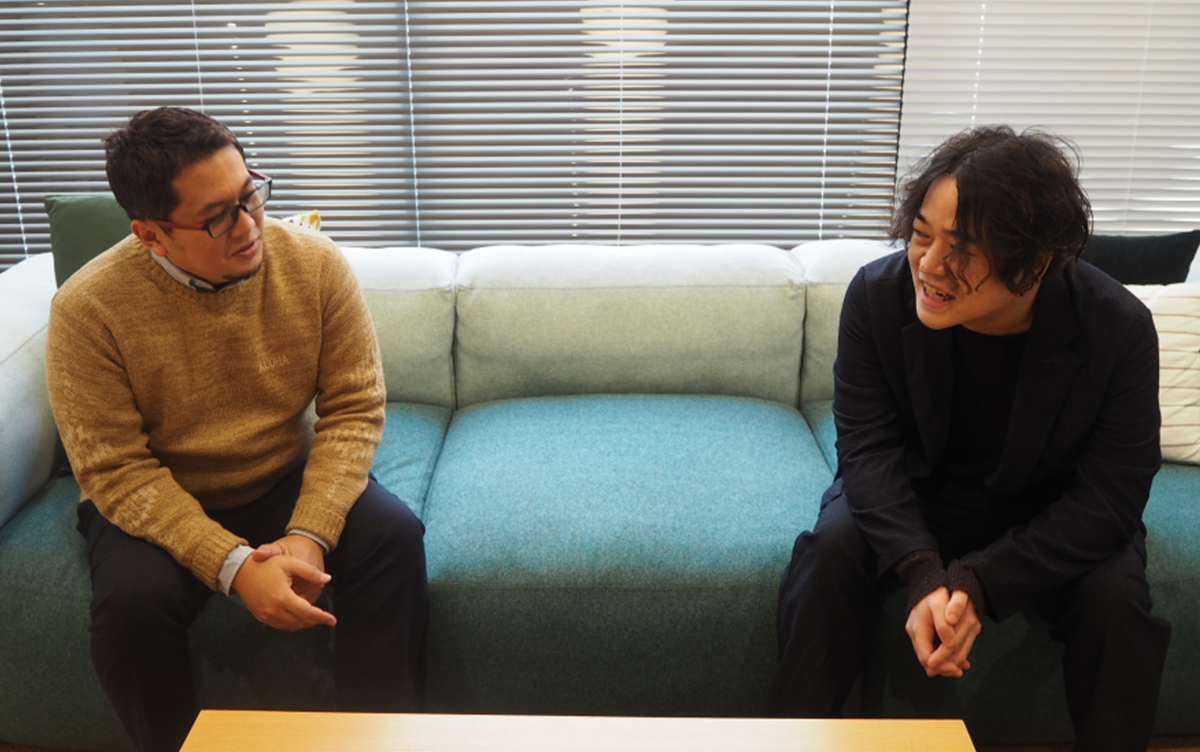
I have the impression that the SRE department is more like a "behind-the-scenes" department, with few opportunities to work directly with customers.
This question has made me think again about "how I should demonstrate the performance of my team" as a manager, and I believe that the motivation of each member is tied to the performance of the team.
I also thought that the root of motivation might be "putting the customer first.
A relatively large percentage of my team's work is "maintenance work" after customers have installed HUE. Therefore, I believe that each one of us is motivated by the fact that our customers think "HUE" is a good system" through the maintenance services we provide.
In order to provide higher value to our customers through "HUE" and to improve our own performance, we must always put the customer first and be aware of what we must do to provide high quality maintenance services. I go about my daily work with this in mind.
There are two perspectives that I value in order for my team to perform well.
The first is to have a concrete image of the customer and the situation.
As I mentioned earlier, our team sometimes develops tools to monitor systems and servers for problems.
In developing these tools, we ask our team members to imagine in concrete terms, "If this kind of problem were to occur, how would the customer be affected by the problem, and what kind of inconvenience would it ultimately cause?
After assuming the problem and the scope of its impact, we ask them, "Then, what can we do to prevent the problem? Then, what can we do to prevent the problem from happening?
In addition to tool development, the SRE department also prepares operations in case a problem actually occurs that requires the involvement of engineers in the product development department and maintenance consultants.
In preparing operations, I encourage the entire team, including myself, to formulate operations based on a concrete image of the specific situation in which the engineers and maintenance consultants will respond to the problem so that they can quickly find the root of the problem and solve it.
Second, I support each team member to realize his or her career and future vision.
I believe that each team member has his or her own ideal career and future, so I try to assign tasks according to the career and future they are aiming for, to the extent I am able.
By doing so, I believe that I am able to motivate each individual through their daily work, which in turn leads to team performance.
In order for "Works Applications' SRE" to achieve the best performance.
Do you have any other tips for team management?
I mentioned earlier that I try to assign tasks according to the career and future vision of each team member, and if there is anything else I can do as a manager, I would like to help.
To this end, in addition to daily 1-on-1s, I would like to create a system in which I can always listen and offer advice to members if they have any career-related concerns, and I intentionally set up communication to draw out concerns from them and consciously talk about career-related issues in our communication. For example, if I say, "If you want to start your own business, you can talk about these kinds of things.
For example, I might say, "If you are aiming to start a business, you might want to learn more about this," or "Since you have these characteristics, perhaps freelance work would be better suited for you.
This is also a company value, but I don't think it is necessary to be bound by the confines of a company or organization when doing my work. I want our members to be free to think in a certain way, such as finding overlap with our mission or contributing to the realization of our mission as they realize their "own career".
In my case, I try to assign tasks according to each member's individuality.
Earlier, I mentioned that in the SRE department, we are always expected to solve every problem, from large problems to small ones, in a matter of seconds.
And when we are full, we naturally seem to see the essential aspects of a person.
For example, "This person can approach a situation from this point of view," or "This person feels stress in this situation," etc. In daily work, I think we naturally understand the range in which each member can work without stress. .
If team members have difficulty or stress in their work, the team atmosphere will deteriorate and productivity will drop.
What kind of person would you like to work with as a manager of the SRE department?
Are you someone who takes responsibility for your own career?
Are you someone who is not dependent on the company, but rather someone who is willing to use your experience at Works Applications as a stepping stone to achieve the career you are aiming for? I would like to work with someone who has the spirit of "I will use my experience at Works Applications as a stepping stone to realize my career goals" and who has an upward mindset.
Not only SRE engineers, but also engineers need to stay up-to-date with the latest trends and technologies in the rapidly changing IT industry and continue to learn on their own. I believe that those who have their own will and can make efforts to realize their career will have a great scope for growth as engineers.
I would like to work with people who are willing to take on challenges in areas they are not good at, or in behind-the-scenes work that is difficult to put in the spotlight, rather than focusing solely on areas they are good at or on prominent tasks that easily get them in the spotlight.
Even if it is an area in which you are not good at, you should be able to ask yourself, "What effect will this work have on the client? How can I grow as a person? I believe that those who have the courage to take the plunge with a positive attitude are the kind of people who can be successful in the SRE Division.
We have a flat environment with no hierarchical relationships and no seniority system, so I think that those who can propose and implement their own ideas without hesitation, in a positive sense, will be able to grow freely in our company.
Our "Will
What do you hope to achieve as an SRE engineer at Works Applications?
As for the SRE department, I believe that we need to develop a solid infrastructure and establish operations so that even if the number of customers using HUE increases significantly in the future, we will not be affected. Through the various knowledge and tools we are currently learning and developing, we would like to build a foundation that will allow us to operate smoothly and naturally even if the number of customers increases by an order of magnitude in the future!
As M.T. said, even if the number of "HUE" customers increases further, I want to provide stable operations as the SRE department, which is a Will that I also share.
In addition, although this may sound a bit indirect, I believe that by contributing to the improvement of HUE's value and reliability through our work as the SRE department, we will be able to increase the number of customers who share our belief in the value that HUE brings and will adopt it. By creating such a virtuous cycle, I would like to realize our mission of "expanding corporate value for our clients!
Pick up! ★
The openness and diversity of values at Works Applications
Ever since I joined our company in 2006, I have always felt a sense of "openness. There is no friction between entrenched divisions, but rather a shared awareness of problems that transcends divisional boundaries and a willingness to take on the challenge of solving problems in a cross-functional manner.
Incidentally, the SRE department basically telecommutes from home, but several times a year, the management and human resources departments take the lead in holding company-wide face-to-face events. By providing opportunities for face-to-face communication throughout the company, I believe that even under teleworking, communication and team awareness do not get stuck in a rut. In that sense, the company is very open.
Yes, it is. We have a very open atmosphere, and the flat relationship between employees is one of our company's attractions.
In order to solve our clients' problems, each individual, regardless of position, tries to fulfill his/her job as a professional, so there is no atmosphere of "it is difficult to talk to someone with a higher position.
I also feel that the diversity of values is another appealing aspect of our company.
This is only my own impression, but in talking with people from other companies, I have learned that there are a surprisingly large number of people who struggle to communicate with their supervisors and coworkers because their values do not match or they are not recognized for their own values.
In our company, one of our action guidelines, "5Ways," is "Everyone Wow!: Recognize the existence of diversity and respect each other in a sincere and fair manner. I believe that one of the characteristics of our company is that people with different values respect each other and can act toward a common goal, "for the customer.
*There are some positions that do not allow telework due to the nature of the work.
*There are departments that flexibly use both teleworking from home and coming to the office.
*For more information about "5Ways", please click here.
Information in this article is current as of the date of publication.

Profile
SRE Engineer
M.M. Joined the company in 2006 as a new graduate
After working as an implementation consultant and maintenance consultant for ERP package software, I moved to a position in charge of supporting the development department. Currently, he is a manager in the SRE department.

Profile
SRE Engineer
M.T. New graduate, joined the company in 2016
Immediately after joining the company, he was in charge of infrastructure-related work in the EC department at the time. He then moved to the SRE division, which handles ERP package software. He is currently a manager in the SRE department.
Interviewer: M.S., Human Resources
Related Articles
Engineers
Three organization heads in their 30s who will create the future gather together. What is the appeal of Works Applications from the viewpoint of a department manager?
S.I. / H.A. / Y.F. / 2010 new graduate
Development / Sales / Consultant
Engineer / New graduate
Engineers
Engineers and customer support staff fulfilling their "responsibilities" with their own thoughts and feelings.
T.I. / S.S. Year
Customer Support / Engineer
Engineers
Engineers
A closer look at the "HUE" Evangelist! What value our products create for customers, workplaces, and society
T.T. / M.F. Year
Technical Sales
Engineers