
Notices
The Changes School Corporations Face and the Benefits of DXing Back-Office Operations - What are the Key Points for Successful Implementation of School Accounting Systems? -2022/02/08
2022/02/21
<Participants in the Roundtable Discussion
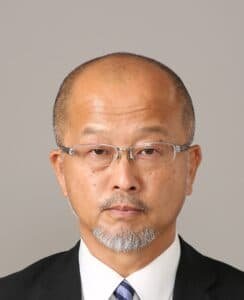
Mr. Jun Iguchi, Representative, Iguchi Management Planning Office
After graduating from university, Mr. Iguchi joined Tostem Corporation (now LIXIL Corporation), a building materials manufacturer, and worked as a sales representative for major general contractors and housing manufacturers,
He experienced sales to major general contractors, housing manufacturers, and sales companies. After that, he worked for SystemD Corporation for 26 years in the software business,
He has performed a wide range of tasks from business development, product planning, strategic planning for acquiring sales channels, practical experience in the field of sales, to management.
In March 2020, he established an office focusing on management revitalization support and IT consulting.
Works Applications Enterprise, Inc.

The remarkable changes in the social environment caused by the Corona disaster have accelerated the shift to DX, including online classes, in the field of education. The management of educational corporations is also undergoing a similar transformation.
Founded in 1996, Works Applications Co., Ltd. has developed ERP package software for major Japanese companies and has provided solutions to more than 2,200 companies to date. ("WAPE"), a member of the Works Applications Enterprise Corporation ("Works"), to support the DXing of school corporations. Announcing the launch of "ERP Solution for Private Universities In November, WAPE, a member of the Works Applications Group, Inc.
WAPE President Miyahara and Sasaki and Nakajima, who are involved in "ERP solutions for private universities," welcomed Mr. Iguchi, an IT consultant with expertise in the education industry, to a roundtable discussion to exchange opinions on the DX-ization of school corporations and its current status. We would like to provide an overview of the discussion through this article, and also discuss the background behind Works' provision of "ERP Solution for Private Universities.
Changes in the business environment surrounding school corporations, including the declining birthrate
-First of all, please tell us your thoughts on the environment surrounding the education industry and the situation that school corporations are in.
Mr. Iguchi:
It is clear that the education industry has been affected by the Corona disaster, but even before that, the business environment for school corporations was quite difficult due to the declining birthrate. However, it is not necessarily the case that attributable income is simply decreasing because the number of children is decreasing; the per capita cost of education is actually increasing. As a result, we are not seeing a slowdown in the overall market, in fact, we are even seeing some areas of growth.
While it is true that the number of students commuting to school is decreasing, according to a recent survey by the Ministry of Education, Culture, Sports, Science and Technology (FY2020), the percentage of students entering higher education institutions (universities, junior colleges, technical colleges, and vocational schools) is 83.5%, and rising every year. The field of lifelong education, including recurrent education such as tutoring services for working adults, has also been growing, and out-of-school activity expenses such as correspondence materials and cram schools used at home have been increasing steadily, especially among households with children attending private elementary, junior high, and senior high schools.
In other words, in terms of the business situation of the school corporation, not all schools are seeing a boost in income itself, but in some, the number of adult learners is increasing, the number of students in general is on the rise at some institutions of higher education, and the development of on-campus infrastructure and the promotion of online classes, etc., are all contributing to the There are also some areas that are on the upswing due to various historical backgrounds.
How to use budgets for school corporation accounting that will be changed by DX promotion
-What are some of the accounting characteristics of school corporations compared to, say, general companies?
Mr. Iguchi:
First of all, as a basic premise, the major difference between general companies and educational corporations is whether they are for-profit or non-profit. While a general corporation is a for-profit organization that aims to make a profit through independent efforts, a school corporation is a legal entity established under the Private School Law, and the purpose of its activities is education, not profit. Therefore, they receive subsidies from the government for ordinary expenses in the form of private school subsidies and basically follow the accounting procedures in accordance with the accounting standards for school corporations established by the government with the idea of not making profits.
In fact, in terms of how the DX change, the theme of this issue, has brought about changes in school corporation accounting, there has not been a great deal of change. However, the way budgets are used has changed significantly.
Originally, school corporation accounting was called budgetary accounting, and basically, a budget was set for each fiscal year and strictly executed based on that budget. When preparing a budget, items such as the purchase of equipment for education and research and the maintenance of facilities are allocated to accounts according to their purpose. However, the budget that would have been allocated to equipment and facilities in the past will now be processed under the project purpose or account title related to the DX-ization, so it is necessary to change the breakdown of the budget.
In addition, based on the government's policy to promote DX-ization, the number of schools actively receiving subsidies for DX-ization is increasing as the government is adding subsidies for ordinary expenses and establishing a new subsidy system.
-Is it possible to say that DXing of school corporations is progressing smoothly?
Mr. Iguchi:
I think that we are trying to move forward, but we are not quite there yet. The online classes I mentioned earlier were halfway through the Corona disaster, and the GIGA School concept has made rapid progress in the provision of terminals for elementary and secondary education, but there are still many areas that are still in a state of exploration, such as the content of educational content to be used on the terminals.
As for corporate management, although the operation of teaching support systems for teachers is becoming more widespread, it is clear that there is a delay in the adoption of DX for accounting, accounting, human resources, financial management, and other staff operations compared to corporations. For example, they are not sure where to start. For example, when introducing a new automation tool such as RPA, some companies are struggling to decide which department should apply it to which operations, how the organizational structure should be changed, and so on.
In other cases, there are system options, but internal control is not progressing well. Even if a new system is introduced, individual differences in information literacy among users can cause the system to become obsolete without increasing its utilization rate.
Advantages that DXing of accounting operations will bring to school corporations
-What are the advantages of DXing school corporations in terms of accounting operations, even if the challenges are overcome?
Mr. Iguchi:
DXing accounting operations allows for more real-time confirmation of the status of budget applications and executions. For example, based on the suppliers and equipment items to be purchased, which were decided at the budgeting stage, it is possible to link directly with the suppliers' e-commerce sites to automatically capture execution information. In addition, it is possible to systematize the entire process of where the equipment is delivered, inspected, and managed, which not only automates and improves efficiency, but also strengthens internal controls to prevent fraud such as fictitious budget execution.
-What is the response from school corporations that have actually adopted Works' ERP package for DX?
WAPE Sasaki:
As Mr. Iguchi mentioned, budget control is very important in the accounting of school corporations, and our school corporation clients say that it is attractive that a single system can complete various accounting tasks, including financial and management accounting including budgeting, purchasing, expense reimbursement, and fixed asset management, and control the budget. They say the appeal of the system is that it allows them to control their budgets. In addition, the newly announced "ERP Solution for Private Universities" is scheduled to expand its functionality to include the payment of school fees and the execution status of research expenses in the research department, as requested by our customers.
WAPE Nakajima:
Speaking in terms of efficiency improvement using the system, I have the impression that the paper-and-stamp culture is deeply rooted in many school corporations. On the other hand, for school corporations that are already using our system to improve operational efficiency, for example, when a teacher submits an application to purchase an item, the teacher enters the information into the system and the staff can check the contents on the system, thereby streamlining the entire process from purchase application to receipt and inspection of the order. The system allows for streamlining and centralized management of the entire process from purchase application to receipt and acceptance of orders. In particular, we feel that a recent trend is that we are receiving more and more requests to optimize budget management and improve convenience for faculty members by linking EC sites, including Amazon Business, with financial accounting systems. The system is being used as an all-in-one system that covers not only purchasing operations, but also expense and travel expense reimbursement applications, supporting operational efficiency throughout the university.
The key to success in system implementation is to align the awareness of faculty and staff and to define common goals
-Do you have any examples of systems implementation aimed at DXing accounting operations that we can use as a reference?
Mr. Iguchi:
A school corporation was managing its procurement of goods by placing orders individually using a procurement website or directly with vendors. At one point, the company established an operating company to consolidate these procurement methods. At that company, when procuring goods, the system was linked to the e-commerce site so that budget execution could be tracked in real time for each department. By establishing an operating company, we were able to consolidate the procurement work that had previously been carried out separately by the school corporation's staff. As a result, the cost of procurement itself was reduced, the efficiency of administrative work was improved, and the case was also used to prevent fraud.
WAPE Sasaki:
I see, that is an interesting case where everything is working well. On the other hand, I don't think many school corporations can take such drastic measures as establishing a business corporation. Do you have any examples of cases that did not go well?
For example, even if we consider introducing a new system to improve the work efficiency of teachers and staff, if the teachers, who are the users of the system, cannot understand the change in their familiar ways of doing things, and if their dissatisfaction grows, it is possible that the plan will be abandoned. We believe that it is necessary to proceed with the selection and implementation of a system while taking into account the opinions of the teachers and staff on site.
Mr. Iguchi:
As you say, in the majority of cases, school corporation system reforms do not actually proceed well. In a school corporation, where the opinions of the faculty are strong as an organizational structure, systemic changes will not be realized unless the support of the faculty is obtained. In such cases, we propose to set up a kind of committee that includes both faculty and staff. It is important to create an open environment of a committee to steadily discuss such issues as how to allocate more budget for research if work efficiency can be improved in this workflow, or how to promote DX for the entire school, which will have a branding effect and lead to student recruitment. It is important to discuss these issues with each other steadily.
There was also the case of the paperless system that accompanied the introduction of the system that I mentioned earlier, where the system was actually put into operation but the resistance to the paperless system from teachers of all ages remained and the system was frozen without being used.
In order to determine where the organization should go from here, it is necessary to define common goals from the perspective of school management, without being bound by conventional practices, after ensuring that teachers and staff are aware of the same goals. Without this, systemization will certainly not be successful, and as a result, school management, including student recruitment, will not be successful.
WAPE Sasaki:
Thank you very much. This is very helpful.
Works products that can provide comprehensive support for DXing of corporate operations because they have been targeted at general companies
-Works is in a position to support management by providing systems to customers. What are the characteristics of your proposals to customers?
WAPE Sasaki:
Since our products were originally developed for large general companies, they have a wide range of functions in the field of financial accounting. Because they have so many functions, we listen to the people actually using them to help them select the functions they should use, and we provide them with the most appropriate proposals for their situations. In terms of strengthening internal controls, we can also provide school corporations with a configuration that conforms to the internal controls adopted by major corporations. In addition, by integrating Works services such as workflow and chatbot into the cloud, we can provide comprehensive support for DXing not only the accounting field but also corporate operations.
In addition, since the product was originally designed for Japanese companies, we believe that our strength lies in our ability to flexibly respond to Japanese business practices and legal changes. As I mentioned earlier, there are also areas where we are working on new functional enhancements in response to requests from school corporations. We are striving to continue to offer a variety of functions in response to changes in the environment as standard functions.
-Do you think that detailed follow-up is a key point that is required by the school corporation?
Mr. Iguchi:
I think it is a very good follow-up that the standard functions are being extended more and more to meet the needs of school corporations.
Works' system has been used by general companies for a long time and has a lot of experience, and I see it as a product that offers many options, taking advantage of the wide range of standard functions. If I were to add a point, I would say that as the functions are expanded, it will be necessary to organize the contents of business operations, or there are operational methods and menu structures that are unique to schools.
School management system with flexibility required in the new normal era
-Finally, I would like to ask Mr. Iguchi and President Miyahara.
Based on what you have said today, what do you think the ideal school corporation should be in the future, and what is your vision for the future?
Mr. Iguchi:
The Corona disaster is a good starting point, but I still believe that schools need to have a management structure that is flexible enough to respond to the new normal era. In terms of management, there are many school corporations that are in a difficult financial situation due to the so-called "capacity shortage," whereby the percentage of students who have filled their enrollment quotas is less than 100%. It is necessary for schools as a whole to reaffirm their awareness of what objectives they should have in overcoming management challenges. It would be best if, as we move forward with clear objectives, we can realize DXing of school corporations, supported by the system, so that we can achieve appropriate allocation of funds and eventually stabilize imputed income.
In addition, considering the state of Japanese society, I believe that the biggest challenge is to continue to provide schooling opportunities, and that society as a whole, including not only educational institutions but also general companies, should think about school education.
WAPE Miyahara:
As Mr. Iguchi mentioned, the DX-ization of education has been promoted by the Corona disaster, but the reality is that the DX-ization of the back office, where teachers and staff are involved, has lagged behind. Our product concept is to improve operational efficiency and convenience. We would like to support the realization of DX for school corporations.
In terms of responding flexibly to social changes in the new normal era, we would like to provide solutions to school corporations based on our business model of "ERP that continues to grow based on customer feedback," which we have continued for more than 20 years. In the area of internal control, as I mentioned earlier, we have a track record of providing solutions to more than 2,200 companies, mainly major corporations, and we hope to support DX for school corporations with our effective systems.
Last but not least, we operate a user committee called the " User Committee" to share information and exchange opinions between us and our customers, and between our customers and each other, in order to achieve a synergistic effect between the improvement of product functions and the improvement of customers' operational efficiency, and to achieve mutual and lasting growth. We have also established subcommittees where school corporations can exchange opinions and share information on DXing. We also have a subcommittee where school corporations can exchange opinions with other school corporations and share information on DX. We believe that our mission is to fully support school corporations in achieving their goals.
-Thank you very much for your time today.
This article is current as of December 2021.