Web Articles Digital Invoice
2023/02/01
~Digital invoicing will bring about an "input-less world
The invoice system will be enforced from October 1, 2023. The invoice system is a new system that allows the recognition of the tax rate and tax amount by the seller and the buyer on the invoice (qualified invoice), and the deduction of consumption tax on purchases. In parallel with the invoice system, the digital invoice system, which digitizes the contents of the invoice in accordance with international standards, is expected to spread, thereby promoting DX in business-to-business transactions. While issues such as transactions with tax-exempt businesses remain in the invoice system, the complete digitization of paper and PDF transactions through digital invoicing should revolutionize back-office operations.
In this article, Shuichi Sakurada, a senior research committee member of the Japan CFO Association, and Shinsuke Fujii, executive officer in charge of SaaS, and Shogo Ishikawa, executive officer in charge of ERP, from Works Applications Group, which started offering a pilot program for a system compatible with digital invoicing in October, discuss the group's The following is a summary of the discussion between Mr. Shinsuke Fujii, Executive Officer in charge of SaaS, and Mr. Shogo Ishikawa, Executive Officer in charge of ERP, from Works Applications Group, which started offering a pilot program of the system in October.
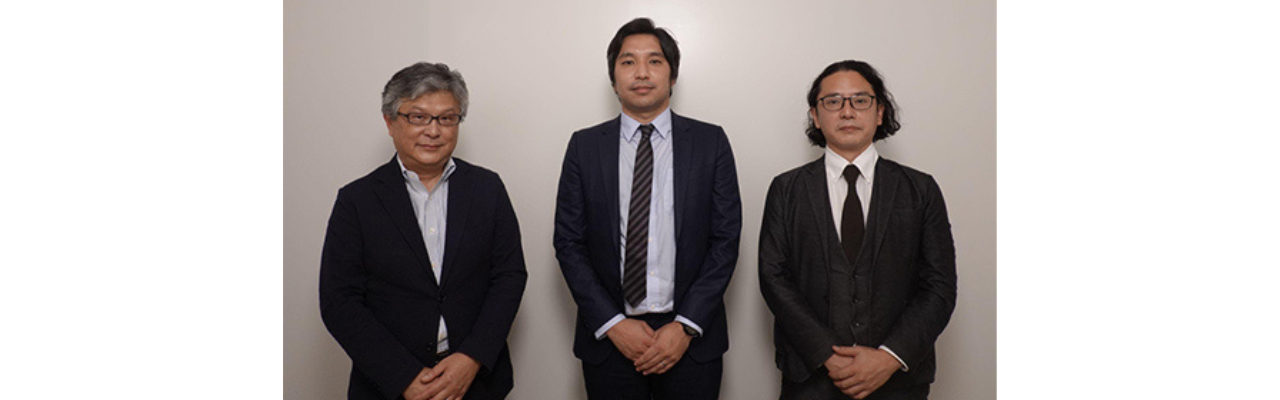
Table of Contents
Participants
Mr. Shuichi Sakurada
Chief Research Committee Member, Japan CFO Association
Managing Director, Accounting Advisory Co.
Certified Public Accountant
Mr. Shinsuke Fujii
Executive Officer (SaaS), Works Applications Systems, Inc.
Mr. Shogo Ishikawa
Executive Officer, Works Applications Enterprise Corporation (in charge of ERP)
Sakurada: Many people have an image of Works Applications as a company that started with HR systems, but now, after a corporate split, the company is expanding its business to include financial and other ERP packages that have been provided since 2004. However, after a corporate spin-off, the company now focuses on ERP packages such as financial and accounting systems, which it has been providing since 2004. First of all, I would like to ask you about the characteristics of Works Applications.
Ishikawa: The Works Applications Group provides packages in the accounting area, including SCM, which might be called the execution area. Our business concept is "no customization" and "free version upgrade. Our business concept of "No Customization" is to generalize the business requirements and business practices required by companies regardless of industry or business category and provide them as standard functions in order to eliminate individual customization, which is one of the factors that reduce the efficiency of our clients' IT investments. The "Free Version Upgrade" concept is to upgrade the version within the scope of the maintenance fee without additional cost from the customer in response to legal revisions, middleware evolution, and so on. These points have been highly evaluated, and we currently have about 2,200 customers in about 320 corporate groups, mainly major companies.
Sakurada: I myself have been involved in many areas of accounting, and I believe that the accounting area of ERP is not greatly influenced by industry, except for the financial industry such as banks and securities companies. Furthermore, with the introduction of International Financial Reporting Standards, I believe that the accounting requirements have been met. Do you have any specific examples in the accounting area where Works Applications' concept is being demonstrated?
Ishikawa: We have not added any particular functionality to the "Accounting Standard for Revenue Recognition," which became effective in 2021. This is because our products have already been able to support this functionality, as the timing of the recognition criteria can be freely selected according to Japanese business practices. Even if the revenue recognition standards were unified, the product would not be significantly affected, and the customer would only need to change the settings. This is one example of how we were able to comply without the need for additional IT investment.
The new invoice system affects not only the invoicing side but also the payment side of the invoice recipient. New development will be required, but we are taking the stance that we will strive to minimize our customers' IT investment and provide this service at a lower cost.
The current situation surrounding DX and the future of automation brought about by digital invoicing
Sakurada: Next, I would like to ask about DX. I personally think of DX from three perspectives: first is the digitization of business, second is the digitization of transactions, and the last is the digitization of processes. From an accounting perspective, I believe that the digitization of transactions and processes is an important theme. In particular, process digitization is the automation of monthly closing except for accounting estimates. And, as recently referred to as data-driven management, we believe that management decision-making based on data is important. How does Works Applications view the promotion of DX in the accounting and finance area?
Ishikawa: Digitization of processes has been a fundamental point since we started offering accounting products. Currently, automated processing is built into each product, but we have not yet reached the point where monthly closing can be completed completely without human intervention. This is because the digitization of transactions cannot be completed by a single company alone, although it may be possible to achieve complete digitization of processes with a certain level of investment if the data flow is limited to the company's own internal data flow. First of all, there is a need to achieve consistency of understanding among companies, and this is where government measures such as digital invoicing come into play.
Sending a PDF file by e-mail or other means may also be considered as electronic data transmission. However, these are just electronic data that are neither standardized nor structured, so to speak, lacking in information. In contrast, digital invoices are standardized and structured data that can be processed automatically. If the spread of digital invoices leads to the digitization of information transmission between companies, we may be able to see the future of fully automated monthly closing of accounts. That is why we have high expectations for this digital invoice and would like to contribute to its widespread use.
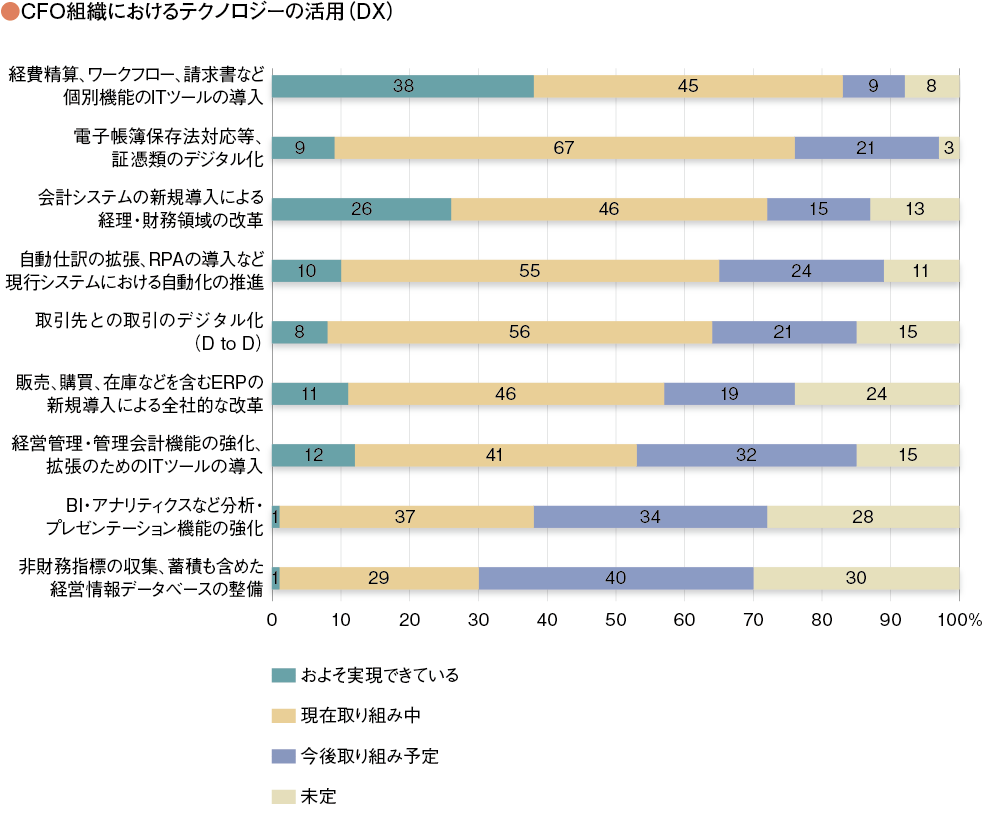
CFO FORUM No. 140 Financial Management Survey Strengthening Corporate Governance and the Contribution of IT Systems From
Sakurada: Looking at the Japan CFO Association's Financial Management Survey, I still feel that the revision of the Electronic Bookkeeping Act and the invoice system have accelerated the shift to cloud computing and digitization all at once. Although the change in the legal system has forced us to change long-standing business practices, I hope that the reforms will continue to progress, even if only gradually, as people learn the convenience of actually doing it. I know that Works Applications often targets large companies, but what do you think are the key points for the spread of digital invoicing?
Fujii: We would like to support the spread of the system, regardless of the size of the company. Our SaaS business already provides services to many small and medium-sized companies. With Digital Invoice, we see a trend in which large companies that have many business partners will essentially take the lead in spreading the service to the SMEs that are their business partners. We want to spread digital invoicing to both large and small companies with as little time lag as possible, and we are committed to providing a service that allows all companies, regardless of size, to immediately realize the benefits of increased efficiency through digitization.
Sakurada: According to the Japan CFO Association's 2020 survey, 50-70% of companies with sales of less than 500 billion yen use SaaS-like cloud services in the accounting area. However, for companies with sales between 500 billion yen and 1 trillion yen, the percentage is less than 30%. In that sense, it is encouraging that Works Applications is supporting all companies.
Sakurada: In the invoicing area, many vendors offer a variety of solutions, but what are the characteristics of Works Applications' products?
Mr. Fujii: As Mr. Sakurada said at the beginning, accounting is basically the same regardless of industry, and I don't think there is much difference in accounting system functionality between products. We have a track record of improving the productivity of various companies' accounting operations, and our strength is our customer base of approximately 2,200 companies, mainly major corporations. In addition to delivering products compatible with digital invoicing to our large corporate customers, we expect that more and more of their customers, such as small and medium-sized companies, will also need to transact using digital invoicing in the future. In such cases, even if it is difficult to respond immediately with the accounting system in use, by using our SaaS products in combination, they will be able to smoothly respond to digital invoices and realize the convenience of digitization more quickly. Furthermore, by linking with ERP and SaaS products, we can increase the number of things that can be automated by linking not only invoice-related operations but also workflow linkage and a wide range of operational improvements.
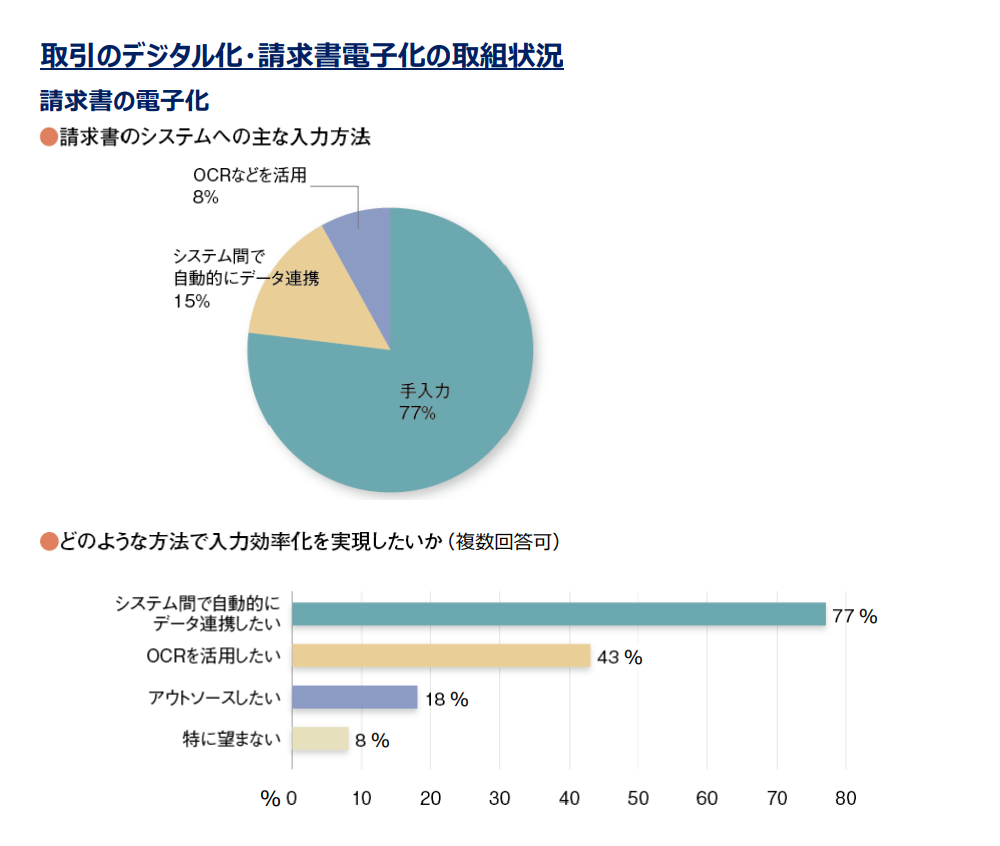
CFO FORUM No. 127 Financial Management Survey Fact-finding Survey on Digitalization of Invoices for Remote Accounting From
Ishikawa: We are also the executive committee member of the Digital Invoice Promotion Council. The purpose of the council is to promote the digitization of accounting and tax-related operations as a whole through the utilization and dissemination of digital invoices, a standard specification based on the international standard Peppol*1.
Sakurada: I am not familiar with Peppol myself, but what is the situation in Japan?
Ishikawa: Peppol is being deployed mainly in Europe and the U.S., and in Asia, it has entered Singapore. In Japan, the Digital Agency serves as the Peppol management bureau in the country, and is working to promote and establish a standard specification for digital invoicing in the country based on Peppol. The standard is to become a unified standard based on international standards, and we, from a private-sector standpoint, are involved in support activities through participation in the planning and study groups of the Digital Invoice Promotion Council.
Sakurada: I hope that the council and vendor companies will actively promote the standard for the sake of popularization.
Ishikawa: It seems that the rate of Peppol diffusion varies widely from country to country, even in Europe and the United States. The key points will be how far the private sector can promote the benefits of introducing Peppol and how to make it possible to introduce Peppol at low cost, and I would like to make sure that we are responding to these issues.
1: Peppol (Pan European Public Procurement Online) is a global standard specification for "document specifications," "networks," and "operation rules" for exchanging electronic documents over networks.
Input-less world brought by automation
Sakurada: Returning to the topic of digitization of transactions touched on in the DX perspective, I believe that as automation progresses, input-less will be realized. What exactly do you envision when you say "input-less"?
Ishikawa: Input-less does not mean that there will be no human intervention at all. A series of processes occur in conjunction with approval requests, budgets, strategies, and business plans, from quotations to orders, delivery, invoicing, and settlement with suppliers. If all of this information transfer between companies is digitized and connected over a network, the burden of having to input data each time is virtually eliminated, as the information received from suppliers is simply combined with the company's own information. The process of checking and approving human modifications will never disappear, but the key point is how to reduce this part of the process.
With digital invoicing, an overwhelming amount of information can be incorporated into invoices. When this happens, payment slips can be automatically drafted. In addition, Japanese business practice involves reconciling invoices with the company's own payment slips, which will also be automated once the data standards are standardized. There is the Zengin EDI system (ZEDI)*2 promoted by the Financial Services Agency, and a new mechanism called "New ZEDI" has been created that allows digital invoice invoice information to be attached to bank deposit information. If the new ZEDI system can automate the entire payment cancellation process, it will allow us to concentrate on important tasks such as confirming the difference between the two invoices. I believe that the future of semi-automation without information fragmentation can be called an input-less world.
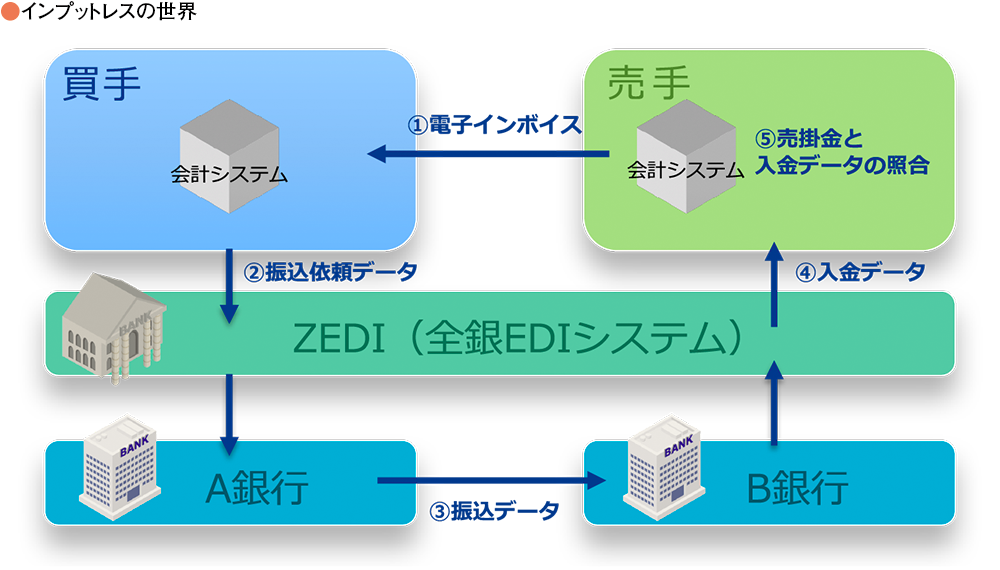
Although we understand that some companies have their payment systems read APIs so that their applications can support them, until now they have basically been based on the JBA format, known as FB data, and have provided a minimum of information using fixed length as the medium for information transmission. Although the volume of information has increased with the introduction of ZEDI, it is not yet widespread. I think one of the reasons is that even if the volume of information has increased, its use had not been clarified. Once digital invoicing starts and the new ZEDI can be utilized, I believe that the way of looking at the data will change significantly. I believe that the combination of solutions will enable the recipient to feel the convenience of the business.
2: The Zengin EDI system (ZEDI) is a system that enables the attachment of various data, such as payment notice numbers and invoice numbers, when making a general transfer from a paying company to a receiving company.
Sakurada: In the concept of a digital workplace, the work environment itself will be digitized, and of course transactions will also be completed digitally.
Fujii: The concept behind the development of our SaaS system, "HUE Works Suite," is "easy DX starting from the workplace. We have services such as an online system that allows multiple people to manage project progress and a cloud-based workflow system that makes it easy to circulate requests for approvals and applications, and we are planning to link these services together with Digital Invoice services. We would like to support a digital workplace suited to each company.
Prospects from the standpoint of a system provider for digital invoicing
Sakurada: We believe that the digitalization of transactions will increase the amount of data, and if we can eventually utilize those data to make decisions, we will have a better system. I was impressed by the fact that Works Applications is not only supporting companies' response to the invoice system, regardless of the size of the company, but is also aiming to eventually support a digital workplace. What are your prospects for penetration?
Fujii: What we are focusing on with the Digital Invoice support service is ease of use. We hope to leverage our strength in our customer base to make our services available to both large corporate clients and small and medium-sized enterprises. We are confident in our technical capabilities and development speed, and we hope to improve our product features as we start our pilot program and bring better products to the market. In addition, we would like to contribute not only to delivering easy-to-use products with stable quality, but also to making a contribution in terms of cost.
Sakurada: UI/UX is a deciding factor, isn't it? Accounting is an area where there is not much difference between industries, and I think that systems that are easier to use will be chosen. The UI and UX should be detailed, such as how much information can be input with few movements, how intuitive it is to operate, and how the work flow is uninterrupted.
Ishikawa: It is also important that the system can be used quickly by people in the field. We cannot reflect the detailed usability of a system unless we know the business in detail, so we are working to improve the system from the customer's point of view.
Sakurada: In order to really spread DX, it is essential to consider how the people on the front line can learn to use IT.
Ishikawa: In ERP, digital invoice is one of the means of information communication, but it is beneficial in that it has an overwhelming amount of information. I expect that this information will lead to input-less and other DX, which will lead to fundamental business reform in companies. As the executive committee of the Digital Invoice Promotion Council, we would like to make a company-wide effort to promote the spread of DX.
Related Useful Information
Web Articles
2026/01/21
Explanation of the 2026 Tax Reform Proposal for Accounting and Finance - What will change from a practical perspective? What are the changes from a practical perspective?

Web Articles
2025/08/01
Behind-the-scenes of the implementation of generative AI functionality in ERP "HUE" for major companies
White Paper
2025/07/24
Introduction to the "Entire Base Establishment Accompaniment Service
Related Case Studies
Paperless and business reform one step at a time! Effects of HUE implementation and future prospects
Yanase Corporation

Reduced 1 million documents per year and realized a paperless office.
Kajima Corporation
Optimizing the entire ERP system with HUE's standard functions by moving away from customization
EXSOL Corporation