
Workflow
Nakamura Sangyo Gakuen School Corporation Kyushu Sangyo University
Easy-to-use design and full functions were decisive factors in the decision to introduce HUE. What is the appeal of HUE workflow that customers are experiencing?

Nakamura Sangyo Gakuen School Corporation Kyushu Sangyo University
Nakamura Sangyo Gakuen Kyushu Sangyo University was founded in January 1960 in Higashi-ku, Fukuoka City, Japan, with the founding ideal of "Unity of industry and academia. It is a general university with 10 faculties and 22 departments in the humanities, sciences, engineering, and arts, as well as 5 graduate schools, 6 master's degree programs and 5 doctoral programs. HUE aims to be a university that produces human resources with "practical ability," "enthusiasm," and "rich humanity" to meet the expectations of industry, based on its founding principles of "promoting civic awareness and a middle way spirit" and "establishing a practical academic culture.
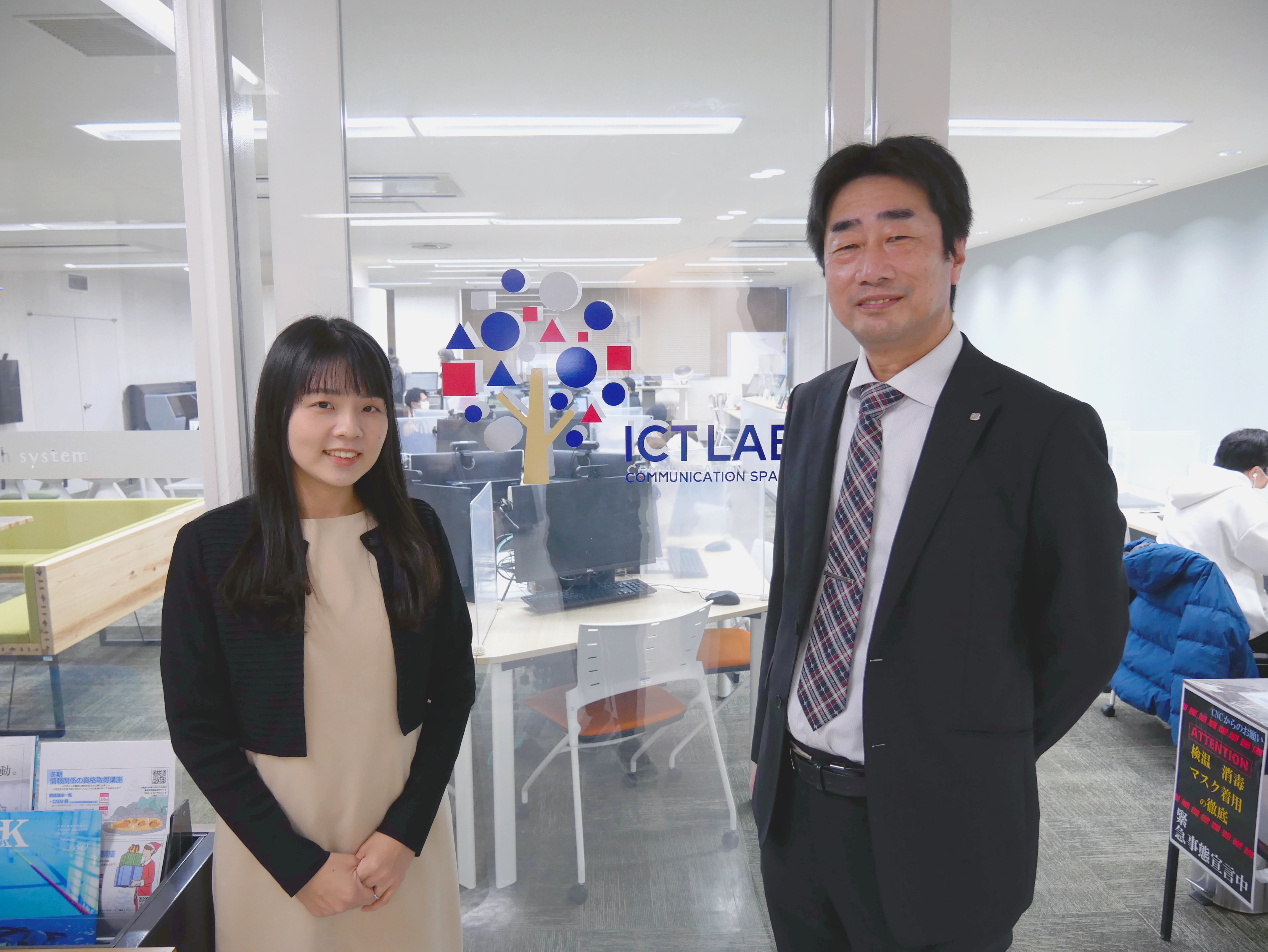
In this article, we would like to introduce some comments from customers who use the "HUE Workflow". We interviewed Mr. Hitoshi Fukuda, Administrative Manager of the Center for Information Infrastructure, Kyushu Sangyo University, and Ms. Fumitsuki Tahara. We asked them about their current situation before the introduction of the system, how they came to introduce the system, and the points they are glad they actually tried it.
Trial and error with RPA tools. HUE workflow implementation due to its design and functionality.
-What kind of workflow system was your school using before introducing HUE Workflow?
Mr. Tahara Mr. Tahara:
We had not yet introduced a workflow system. The flow from application to approval was that an application form (PDF) was submitted on the website operated by the Center for Information Infrastructure (hereinafter referred to as "the Center"), printed out on paper or attached to an e-mail, and then circulated within the department for approval.
It was against this backdrop that DX promotion was set as one of the mid-term goals of the University. DX promotion" encompasses a wide range of areas, such as improving operational efficiency, ICT in education, information dissemination and disclosure, and educational support for students. Among these, we first wanted to improve operational efficiency, especially to speed up the approval process in the application process and make it paperless, so we were experimenting with RPA tools, but had not introduced workflow itself.
-What were some of the challenges you faced in streamlining your business?
Mr. Tahara Mr. Tahara:
There were three issues. First, at the time, we were developing RPA tools by making full use of overseas products, which inevitably had the disadvantage of being written in English and being weak in Japanese. Second, the design of the user's display screen and the administrator's screen on the management side were poor. Third, the amount of work required by the management side for a single application was too much, as several flows had to be created to convert a single application form into a workflow, and Excel files for the management ledger had to be prepared. The amount of work required by the management side was a challenge.
-Why did you choose HUE Workflow? What were the advantages of HUE Workflow compared to other companies?
Mr. Tahara:
I would like to talk about the reasons why we chose HUE Workflow, dividing it into three aspects: introduction, functionality, and operation.
First, in terms of introduction, our university had originally introduced a human resources system that was linked to HUE Workflow, so the system had a database of organizational charts, such as job titles and affiliated organizations, which saved us the trouble of building the system from scratch.
In terms of functionality, when we compared the system with other companies' products, the advanced and visually easy-to-understand design was a major attraction. The fact that the system also included all the necessary standard functions made us certain that it was the right one for us in terms of functionality.
Another important point was that we saw a demo of the system prior to implementation and realized that it could be operated intuitively without the need for a manual. If the system is difficult for applicants and approvers to understand, they may not use it anymore, or they may spend time making inquiries, or they may have to spend a lot of time when deploying the system to other departments. It was good that we were able to dispel these concerns through the demonstration. I felt that such a system would be very easy to communicate to the team members I work with in the future when there is a handover.
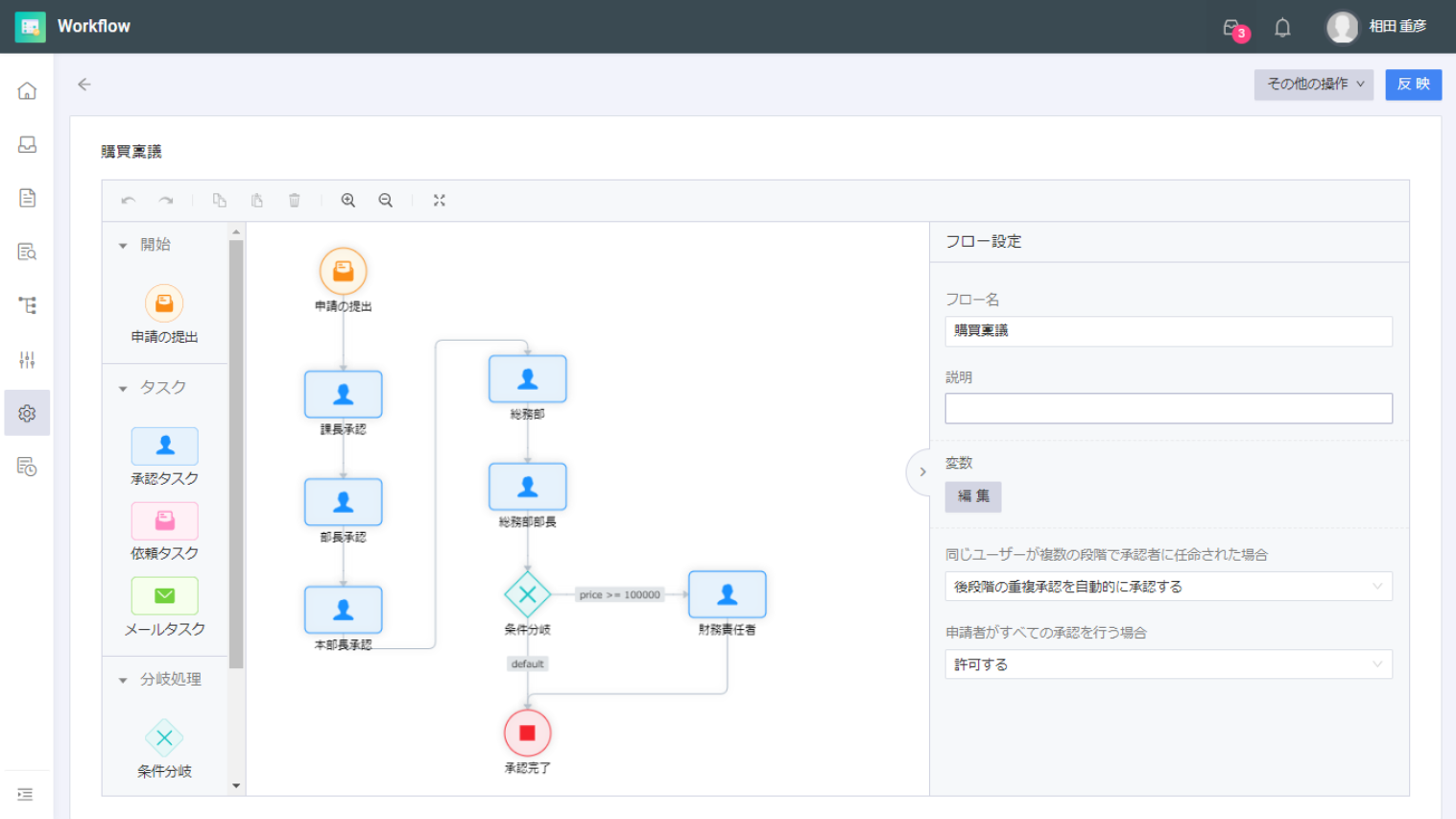
Another important point is that the flowchart for creating the approval flow on the administrator's screen is easy to read. This was highly appreciated because we had not seen such an easy-to-read screen in any other company's product (see figure below*). We were able to confirm how intuitive and easy to operate the placement of icons and the designation of the person in charge by actually touching the screen, which was a major boost to our decision to introduce the system.
Finally, in terms of operations, we found it very reliable that no matter how many times we inquired about support, no additional costs were incurred, and that our opinions were immediately reflected in development. I feel reassured by their willingness to carefully respond to small problems and requests one at a time.
For example, when we first started using the system, the HUE workflow did not have a function for phased return of applications, but at our request, the function was speedily implemented. The way they reflected, improved, and implemented such individual opinions from customers showed that they were willing to work with us as a team to make it better, which was very reassuring. Also, HUE Workflow is upgraded once a month, and depending on the content, we can expect additional functions and improvements in line with our wishes even within a short period of time, which is very attractive.
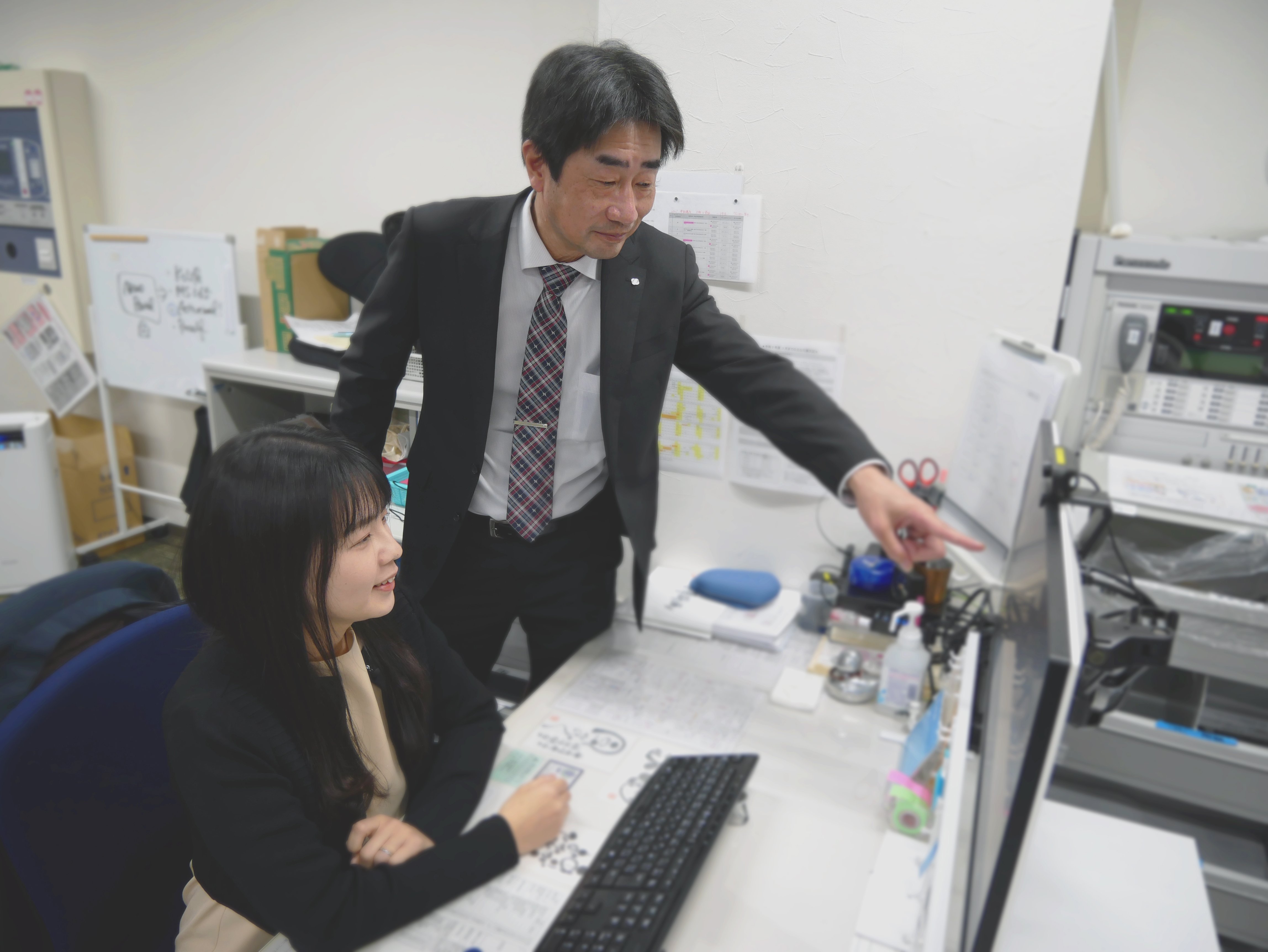
How long did it take you to implement HUE Workflow?
Mr. Tahara:
We started building the system around June and were able to publicize it within the university in August, so we were able to introduce the system in about a month. I was surprised at how quickly it was implemented. I think there were two reasons for the speedy implementation. First, we were able to start building the workflow after clarifying and streamlining the workflow procedures, because we had already fundamentally reviewed the workflow through trial and error using an RPA tool that we had created ourselves prior to building the HUE workflow.
Second, I think the support was very responsive. We asked many questions and made many requests from the time of construction to the time of publication, and we were often impressed by the generosity of the support and the depth of their knowledge of our workflow. Because any questions we had were resolved immediately, I think we were able to implement the system smoothly without any delays in schedule.
Few inquiries after introduction. Want to use it to further improve work efficiency by spreading it outside the department.
What kind of applications are you currently using HUE Workflow for?
Mr. Tahara:
We first used the system with the mailing list registration application form. The Center manages multiple mailing lists within the university based on the application form, for example, mailing lists for sharing information on projects or departmental units.
In the workflow of the mailing list registration application form, the applicant first submits the necessary member information for list creation as an attachment. Next, the person in charge at the Center uses the application form as the basis for registration, updating, and deletion. Finally, if the person in charge does not return the application with incomplete documents, the application is approved by the Center. Once the approval process is complete, a completion e-mail is automatically sent to the applicant.
We started with the mailing list registration application because it was a simple workflow and involved only a small number of people. By the end of March 2022, we hope to have all 12 application forms in our system converted to the HUE workflow. The main purpose of the mailing list registration application form was to go paperless, but for the application forms we are looking to release, the goal is to improve operational efficiency through DX promotion, including a revolutionary change in workflow.
What is the reaction of your staff after the introduction of HUE Workflow?
Mr. Tahara:
We have given them a simplified manual, but the system has been well received for its smooth use even without the manual. In fact, five months have passed since its introduction, and we have received almost no inquiries.
Currently, we have only released four applications, but we are planning to release eight workflows at once in the near future. Currently, we only use HUE workflows for applications that can be approved within the department, but as we expand the use of HUE workflows outside of the department, we expect to receive some inquiries. However, we do not expect to receive any inquiries about the difficulty of using the system.
Mr. Fukuda:
As for my impression of the actual use of the system, the approval process is easy. I receive an e-mail notification, and when I open the URL, the application form appears, so I can start the approval process immediately. In the past, there were many steps to go through, such as changing the date of the seal to be stamped and submitting the application to the department manager, but now it is nice that it is done with just one approval button.
Another useful feature is a function that sends a reminder e-mail to the approver if an application form has not been approved for a day. The timing of when the e-mail is sent can be specified, so it can be changed so that the e-mail is sent after 2 or 3 days, for example. This feature eliminates approval omissions and saves time in checking approval status.
Actually, I had used three different workflows at my previous company, but none of them allowed me to change the settings in such detail. I feel that this is a really well-designed workflow.
Approvals that used to take three days are now completed in one day. We feel that HUE Workflow is contributing to the improvement of our business efficiency.
Please tell us what has been good and convenient about HUE Workflow.
Mr. Tahara:
Since the workflow can be done on the web, I don't have to get up from my seat to submit, print, or file anything, and I feel that it has made my work more efficient. In fact, the approval process can be completed in one day instead of the three or more days it used to take from application to approval. In addition, there was a risk of losing documents when using paper media, but now that the system is online, we are able to avoid such risks.
In the future, depending on the status of coronavirus infection, telecommuting may begin, and we believe that this will help us prepare for such risks and promote diverse work styles.
What challenges would you recommend HUE Workflow to organizations?
Mr. Tahara:
I would like to recommend this system to organizations with many staff members who are not familiar with IT. I think such organizations are especially anxious before introducing the system. That is why I recommend HUE Workflow for its friendly and helpful consultation.
I too have had experiences with the aforementioned system that did not work well for my workflow, but in the end, I think you cannot tell whether any tool will suit your organization unless you try it. I feel it would be very reassuring to have a collaborator who can easily consult with you at such times and support you with a willingness to work with you to create the system.
Finally, what are your requests for the product?
Mr. Tahara:
We would like to be able to set up staff from other departments as administrators when we incorporate applications from other departments into the HUE workflow in the future. Currently, the HUE Center's staff members are the administrators for applications from other departments. We would like to be able to set up an administrator for each department under the current administrator, so that it will be easier to deploy to other departments. We have already discussed this with them, and they are planning to add the function.
In addition to this, we would like to see the tag function in the body of automatic outgoing emails expanded. Currently, only four tags can be specified: applicant number, application service name, applicant's name, and recipient's name, but by adding, for example, the application date, return date, and application object, it would improve work efficiency as the contents of the application can be checked just by reading the text of the e-mail without having to bother to open the URL This will improve the efficiency of business operations.
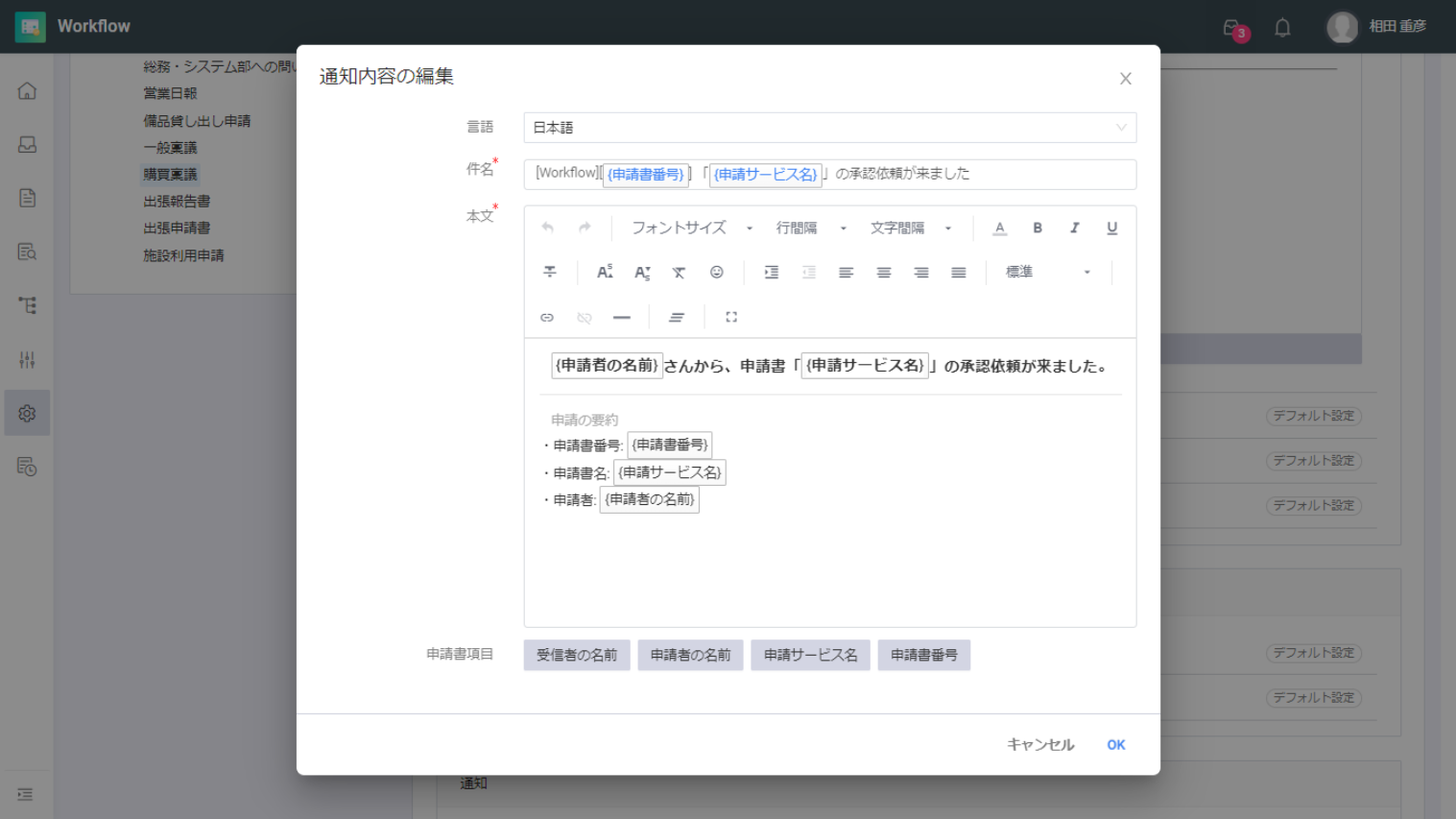
Also, there are other benefits of adding this tag. When sharing the contents of an application with someone who does not have a HUE Workflow account, it is convenient to simply forward the e-mail without having to bother to transcribe the contents of the application.
Mr. Fukuda:
Also, although it may be beyond the realm of HUE Workflow, acceleration of digitization and digitalization is essential for DX promotion, and we believe that integration with other systems and applications will become more important in the future. Currently, we only have an e-mail function, but we believe that further efficiency will be achieved if it can be linked to Office365 and other applications, for example, so that once approval is completed, the information is stored in Teams or other applications that have been set up.
*This article is current as of January 2022.
Related Case Studies
Easy-to-use design and full functions were decisive factors in the decision to introduce HUE. What is the appeal of HUE workflow that customers are experiencing?
Nakamura Sangyo Gakuen School Corporation Kyushu Sangyo University

HUE workflow strengthens control and improves efficiency in preparation for IPO
Acall Corporation