Purchasing
Kyokuyo Industries Corporation
HUE Purchase," a purchasing management system, enables 180,000 to 190,000 sheets per year to go paperless and supports the invoice system. Flexibility of a packaged product that turns the "impossible" into the "possible
Kyokuyo Industries Corporation
Since its establishment in 1953, Kyokuyo Industry Manufacturing Co., Ltd. has been producing highly reliable products that contribute to the improvement of people's lives through its integrated production system from planning and conception to processing and assembly and thorough quality control, based on its technological capabilities and stable management foundation cultivated over many years in manufacturing as a manufacturer of press parts, dies, and automated equipment. We produce highly reliable products that contribute to the improvement of people's lives.
In order to further improve customer satisfaction based on the philosophy of "Customer First," Kyokuyo Industries, Ltd. has implemented and started using Works Applications' (WAP) purchasing management system, "HUE The new system was implemented by WAP's HUE Purchase, a purchasing management system. The implementation was made possible with the support of WAP's partner company, Nippon Information & Communication Corporation (NI+C). This article introduces the background leading up to the introduction of the system and the current status of its utilization.
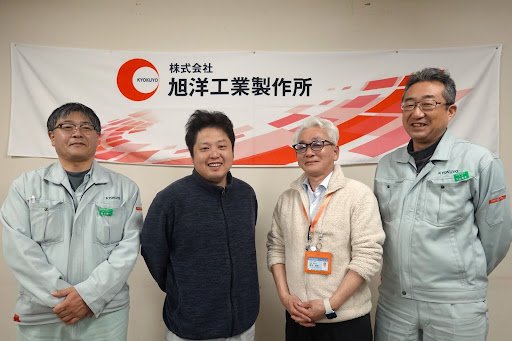
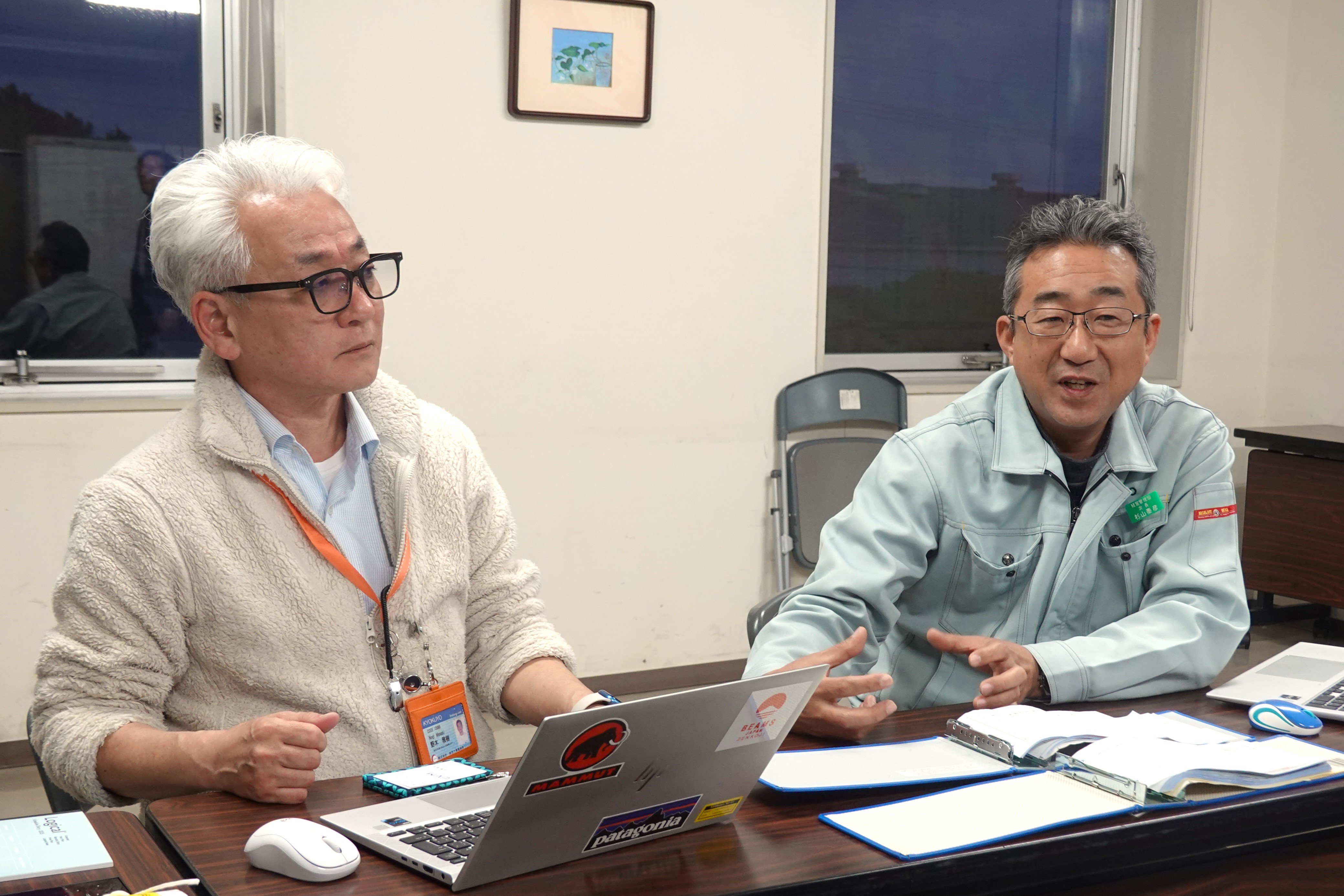
Interview participants (from left to right):
Mr. Kenichi Hoshiai, Procurement Group Mr. Yasuaki Takada
Mr. Masaki Nogi, Business Administration Department Mr. Yasuhiko Sugiyama
Completely paperless for designated slips and compatible with the invoice system
-Please tell us about the background and issues at the time you adopted HUE Purchase.
Mr. Sugiyama:
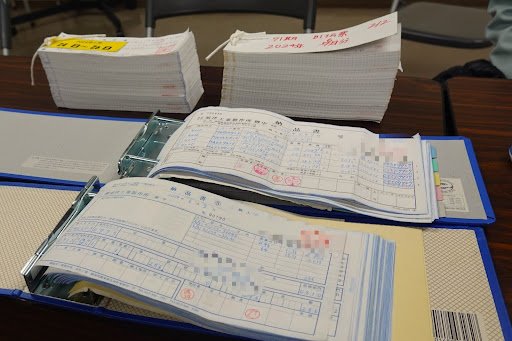
Prior to the introduction of the system, our purchasing operations used paper delivery slips designated by the company. There were four types of delivery slips alone, and we had to punch each one into the old AS400 system. After punching them in, we would check each item one by one based on a checklist. I myself was transferred and became involved in procurement, but everyone was working overtime and frantically trying to handle this. I was in charge of checking, but it was an enormous amount.
Mr. Nogi:
The number was about 10,000 per 20 business days, but we could not start typing until after the 7-business day deadline, so when we started typing each month, we had a pile of about 3,500 delivery receipts (500 receipts/day x 7 business days). Even after the monthly closing was completed, there was still a long way to go before we could catch our breath.
-We heard that the start of the invoice system was one of the reasons for considering the introduction of HUE Purchase.
Mr. Sugiyama:
Yes, at that time, we did not have any forms that were compatible with the invoice system. Although we were issuing payment statements from the system, they did not meet the necessary items for a qualified invoice, so we had to create a new invoice.
Mr. Nogi:
The invoice system started in October 2023, and as a temporary measure, we listed the purchase data from the old system in Excel and created invoice forms in Excel.
Mr. Sugiyama:
We had to deal with this temporary situation for about 10 months. We were in a state of exploration, and the three of us were busy working for more than 20 hours at the beginning of each month, so we had a strong desire to eliminate this problem.
-What were the deciding factors in selecting HUE Purchase?
Mr. Sugiyama:
After gathering information and comparing with other companies' products, we concluded that "HUE Purchase" can handle a wide range of procurement and do what we are looking for. Another deciding factor was that it seemed to be able to strengthen governance, which had been inadequate with paper.
Mr. Nogi:
We had expected from the proposal stage that "HUE Purchase" would make it possible for us to go paperless for all of the more than 10,000 paper-designated slips. Since all the data from the order is connected, we thought we would be able to do it all at once, eliminating the need to type in each case individually. In fact, all designated slips have been eliminated, and since the data is connected, there is almost no need to check the typed contents, which has greatly streamlined our operations.
Mr. Sugiyama:
We had assumed that it would be possible to automatically issue invoices since we had been briefed on the acceptance slip at the proposal stage. In fact, the time and effort required to create Excel forms has been completely eliminated, and we feel that this has helped us solve the problem.
Change in the image of packaged products
-What were your most memorable experiences during the implementation period?
Mr. Nogi:
WAP responded quickly to our initial inquiries, and we felt that they were eager to be of service. Even after the implementation project started, the schedule was well organized and all questions and tasks were handled appropriately, which gave us a sense of security. We also really appreciated the support we received from NI+C. With packaged products, I had the impression that they often said, "We can't do this," but when we asked NI+C if we could do something like this, they always guided us, saying, "We might be able to do it if we set it up this way.
Mr. Sugiyama:
Whenever I expressed my request, "I want to do this," they would reply that it would be possible if I set it up this way, and this flexibility changed my concept of the product.
Also, we started setting up the system from the beginning of the year for operation at the end of June 2024, but we really had to do a lot of work around Golden Week, when we conducted mutual verification for the operation decision. We had a system session on Tuesday, an application session on Wednesday, and a regular PM (project manager) meeting on Friday, and we were frantically working through the cycle.
Mr. Nogi:
In-house, it was often difficult to concentrate on the work because employees would call on us, but we were given a room at WAP's office and we concentrated on the work like a training camp and did it all at once.
-What were you aware of when introducing the package product?
Mr. Sugiyama:
At the kickoff, I told the members who would be in a position to use the system that from now on they should adapt to the system. When you start using a new system, of course you are not used to it and it takes a lot of man-hours. If you don't use the system, you won't get used to it. It's a matter of awareness.
HUE Purchase can be set up by the procurement department without involving the IT department.
-Please tell us about the usage and effects after the introduction of HUE Purchase.
Mr. Nogi:
Until now, inquiries about the system were sent to the IT department, but with HUE Purchase, the procurement department can make various settings themselves, so the speed of improvement has changed 180 degrees. When we don't know how to do something, we can just ask WAP how to do it, and it's wonderful that we can do what we want to do without IT knowledge.
Mr. Sugiyama:
The more you get used to it, the more you can do. That's why we announce not only to the people in the procurement department but also to the people in the field that "familiarity is skill" and encourage them to use it.
The way of purchasing has changed with the improvement of budget accuracy, not to mention the paperless system.
-What changes can you feel in your business?
Mr. Hoshiai:
Since we don't use paper delivery slips anymore, punch input has been eliminated, and we have achieved a paperless operation of 180,000 to 190,000 sheets per year. Basic forms are sent out by "HUE Purchase" and invoice forms are sent as PDF data by utilizing the Inspection and Acceptance Receipt Form.
Mr. Nogi:
Previously, the flow to procurement was long and it took about 10 people to give their approval before we could finally place an order, so the procurement department received inquiries about where the process stopped. We used to receive quotations, prepare purchase request applications, get approval stamps from even directors, and fax them to vendors, but this has now been reduced to one-third of the time. As part of our business improvement efforts, we have also established an internal rule that divides the approval ranks by the amount of money to be ordered, which has also helped to reduce the time required.
Mr. Sugiyama:
On the procurement side, we often received frank requests from the field, saying, "Ask for this," after looking at a paper catalog, but we had to get between the vendor and the requester and respond to various inquiries. After the introduction of the system, we have been able to improve our business by having the client use "HUE Purchase" themselves or directly ask the vendor for a quote. We can also use the punch-out linkage with Biznet in the catalog item purchase function of "HUE Purchase," so we sometimes procure items from there. We procure all kinds of items, but we no longer have to use paper slips, and we can check the acceptance inspection process via e-mail and other data, which speeds up our response time. We can communicate with suppliers as if we were playing catch-up, so there is no leakage of acceptance inspection.
Mr. Nogi:
There was an old-fashioned view that direct procurement over the Internet was unthinkable, but we have obtained the understanding of upper management that this is the trend of the times, and we are using the system. Budget management and forecasting are also widely used in the field. I think the convenience of being able to download and view the data with a simple operation when we want to check it.
Mr. Takada:
You say that the system is visualized, but if the actual results are too visible, it can be a pressure. Because we have a solid track record, we are more precise in our budgeting. I feel that the way we use money, or rather the way the company purchases, is changing.
The number of inquiries we received following the introduction of the new system gradually decreased. The negative feelings toward the old system and the tense feeling at the closing time have disappeared, and we can afford to do various things, so now we can devote our time to making various kinds of detailed manuals and improving our business operations.

-What is your outlook for the future?
Mr. Nogi:
Our next mission is to go from all accounts payable to all accounts receivable. Although we have transferred most of the operations from the old system to "HUE Purchase," there are still some sales-related operations remaining, so we are aiming to transfer all of them while confirming the requirements.
Mr. Sugiyama:
The area we want to dig deeper into is how to hold prices in the product master. Right now it only holds the unit price at the time of purchase, but using a generic item in the master, it looks like we can split up the price breakdown for more detailed calculations and data utilization. We would like to proceed there once we get settled.
-If you have any message for companies considering the introduction of "HUE Purchase", please let us know.
Mr. Takata:
I think there is a demand for this in every company. I understand that there may be some hesitation in companies that still use paper or faxes when placing orders, but please ask WAP first and to the point. As a result, I think they will move in the direction of introducing the system.
Mr. Nogi:
"HUE Purchase" is not just a tool for purchasing, but a very versatile product that can solve various business issues at once. I would like you to use it to your heart's content to see how it can solve your company's business issues.
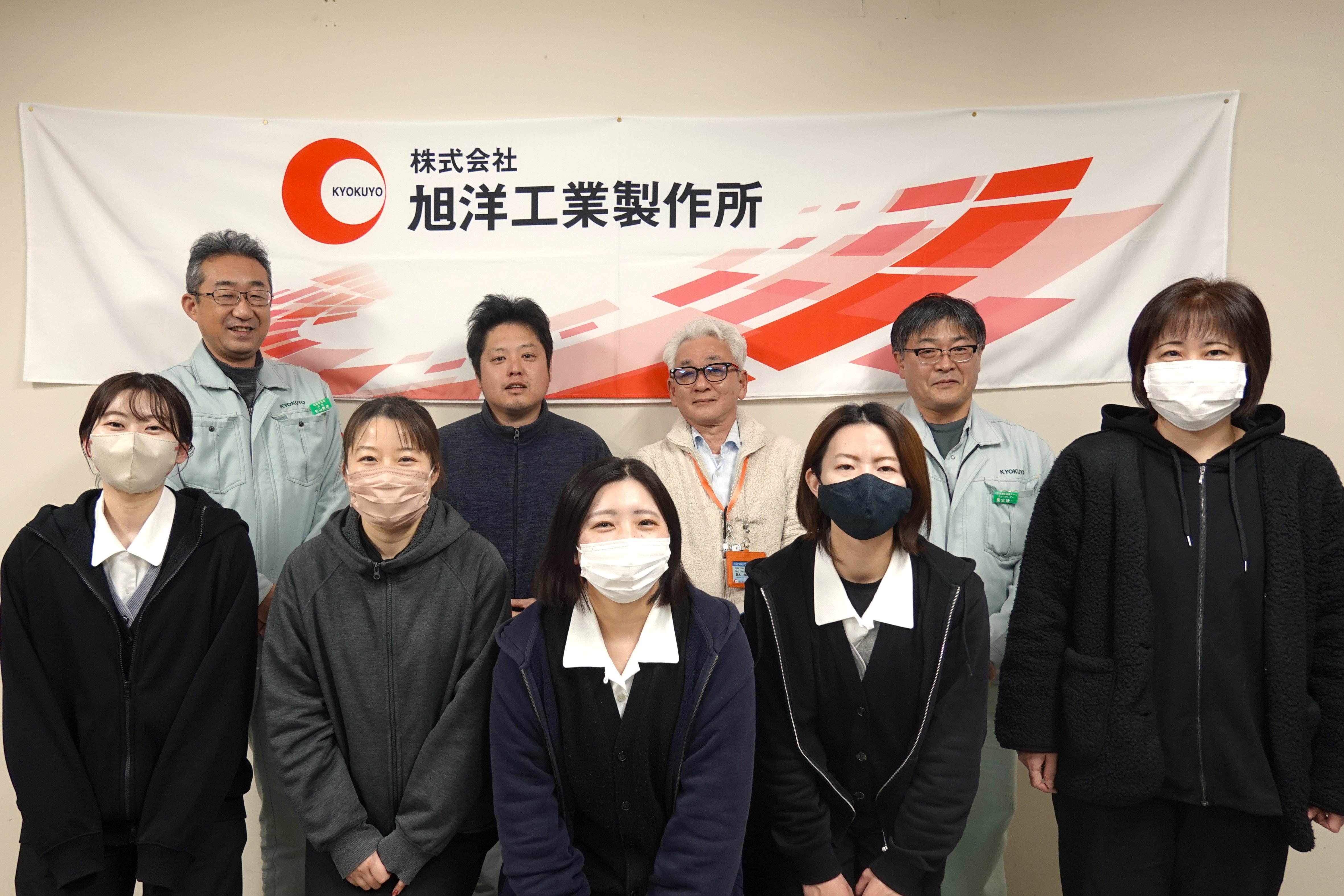
To all members of the Business Administration Department, Procurement Group, Production Management Group, and IT Planning and Management Group
This article is current as of January 2025.
Click here for the HUE Purchase product page.
Related Case Studies
Nankai Electric Railway x WAP talks about the "overwhelming return generated by 'add-on zero ERP'".
Nankai Electric Railway Co.

Nankai Electric Railway introduces HUE DI and upgrades HUE, Building a Management Foundation that Continues to Adapt to Change
Nankai Electric Railway Co.
HUE Purchase supports 180,000 sheets paperless & invoice system
Kyokuyo Industries Corporation