Consultant
Taking the next step up from no experience in Kumamoto! A direct interview with a new employee who is taking on the challenge of "step-up training.
Supporting the challenge from inexperienced IT staff with a team. Challenge of Kumamoto Office
Profile
Customer Support
M.I. (in training) / M.I. / M.A. (in training) / M.I.
Release Date : October, 27th, 2022
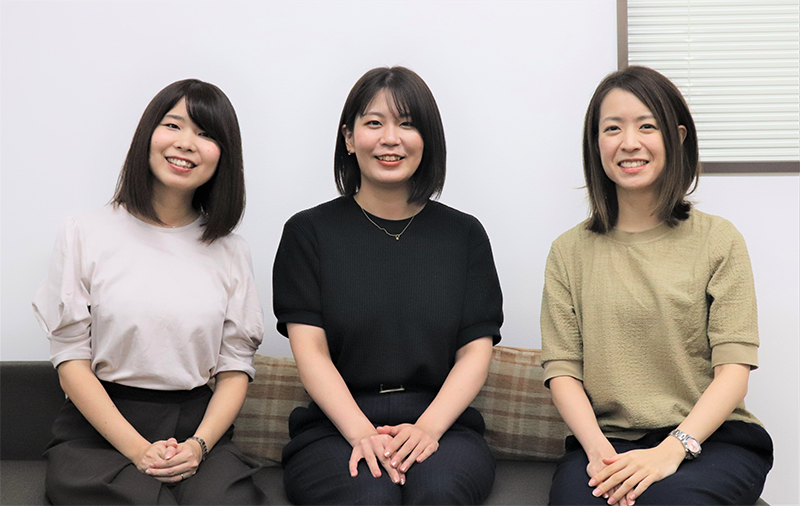
For this interview, we spoke with an employee in charge of training planning and management and a new employee who is taking on the challenge of training under the theme of the "step-up training system" for IT human resources development that has started at the Kumamoto office of Works Applications Group.
The company opens its doors to a wide range of people, even those with "no IT experience.
To the two of you who are taking on the challenge of step-up training, please tell us first why you decided to join our company.

In my previous job, I worked at a call center, and in the course of my work, I often came into contact with various systems and machines, and I had to interact with the person in charge of introducing the system, asking questions about the system and communicating my requests to him for improvement.
As I watched the systems improve and evolve, I became interested in the IT field.
At the time, I was just thinking about my career, and I wanted to gain more experience than just call center experience, so I began my job search for a position in the IT industry.
However, when I saw the words "No experience in the IT industry is required" on the job posting for our "IT Support (Kumamoto)" company, I thought to myself, "I welcome people with no experience in the IT industry! I thought, "This is the best place for my next career, and I really want to join this company! I entered the company with this thought in mind.

I had always wanted to work in a job where I could talk to people, so my previous career had been in the service industry, but at the same time I had a vague interest in IT-related work. However, changing jobs to an IT company required a lot of experience, which was a hurdle for me, and I was not able to take the plunge.
When I was thinking that it was time for me to change careers due to changes in my personal life, I came across a job opening at our company. I was attracted by the "no experience necessary" part and the "training program" and entered the company.
Why Kumamoto?
Please tell us about the Kumamoto Office. The Kumamoto office was newly established in 2021, why did you choose Kumamoto as the location?

First of all, the purpose of establishing the Kumamoto office was originally the idea of moving some of the head office operations to an area outside of Tokyo. In addition, the Kumamoto office was established in 2021 with the intention of decentralizing the base of operations from a BCP (Business Continuity Plan) perspective in response to the new coronavirus epidemic that will begin to spread in 2020.
In deciding on the region in which to locate the base, we researched cities, towns, and villages throughout Japan and picked out candidate sites. Kumamoto was chosen as a result of a comprehensive evaluation from various perspectives, including ease of living, cost of living, and the quality of academic and educational facilities. In addition, during the selection process, we met with various local government officials from around the country, and Kumamoto Prefecture and City in particular responded with very strong enthusiasm, and it was this process that led to our decision to choose Kumamoto.
The Kumamoto office was established in 2021, and M.I. joined the company in 2017.
I have been working at the Tokyo headquarters since I joined the company in 2017, and moved to Kumamoto in 2021, just about the same time as the Kumamoto office was established.
A colleague of mine who was originally in the same department decided to move to Kumamoto and work at the Kumamoto office, and he asked me in a rather casual manner if I wanted to go with him. I was invited in a rather casual manner.
At that time, our company was in the midst of a full telework program due to the new coronavirus, and I was getting stuck in a rut with no change in my daily life, so I decided to go to Kumamoto for a change of pace.
I don't think my colleagues who invited me were expecting that I would actually come with them, but I thought it would be interesting to try something new, like setting up a new base in Kumamoto, a place I have no connection to and have never even traveled to, so I moved there (laughs).
Training that enables inexperienced IT personnel to grow steadily. That is our "step-up training system.
M.I., you are currently an instructor for the "Step-up Training Program" at the Kumamoto office.
(Laughs). I originally worked in the customer support department, handling customer inquiries, and I also worked as a mentor for new employees, helping them get up and running.
As an extension of that job, I was also involved in the planning and operation of a step-up training system. I was then asked if I would like to participate in the planning and operation of the step-up training program.
I then began planning the training program and preparing as an instructor, and in July 2022, the actual training operation started.
Could you give us an overview of the "Step Up Training Program," how you came to start the training program, and your thoughts on planning it?
The first six months of employment are a period of training, during which step-by-step training and practical work are conducted in parallel. The curriculum is divided into four major stages, each of which is designed to provide the necessary IT personnel with the necessary knowledge if they complete all of the training.
Stage 1 is IT basics and accounting knowledge.
Stage 2 is understanding of accounting operations using accounting software.
Stage 3 is understanding database structure through programming.
Stage 4 is a role play for IT consultants.
The system is structured in such a way that students can advance to the next stage by passing each stage. Each time you pass a stage, you will acquire knowledge and skills, and your salary will increase a little bit.
The reason why we decided to start this type of training is because, as the two of you mentioned earlier, when we looked at the employment opportunities at IT companies in Kumamoto, there were overwhelmingly many "openings for experienced workers". We believe that this kind of background makes it difficult for inexperienced people who want to acquire skills as IT personnel to start their careers in Kumamoto Prefecture. One of our missions is "to provide a place for critical workers to play an active role," and in order to realize this mission, we want to provide a place for talented people to play an active role regardless of their experience, and we also want to create Products / Services that contribute to the development of society through the activities of talented people. We have a strong desire to create products and services that contribute to the development of society through the success of our talented people. The reason why we launched this training program is that we wanted to create "an environment where people with no IT experience can take on challenges" and "a training program where people can step up from no experience.
We also heard from the people in charge of Kumamoto Prefecture and Kumamoto City that there are not enough IT personnel in the prefecture, so in the future we would like to contribute to the local community in terms of "IT personnel development in Kumamoto".
How did you go about designing the training program?
We had an idea of the four stages I mentioned earlier, what kind of growth we wanted our employees to achieve through each stage, and what we wanted them to do to achieve that growth, from an early stage.
Until the employees who would actually participate in the training joined the company, we prepared training materials and assignments according to this general framework. In preparing for the training, we needed the cooperation of departments other than customer support, such as development, so we needed to get some preliminary information, such as an overview of what step-up training was and its objectives, before we started. We had to communicate the outline and purpose of the training to all the departments involved, while making adjustments to all the relevant departments.
What are some of the rewards you find in administering the training?
I believe that one of our company's cultural values is to "think first and try things out on your own. This is one of the good points of our company, but at the same time, because we emphasize "thinking for oneself," I honestly believe that there is a lack of established training methods for new employees, such as a lack of materials and a lack of a clear flow.
If a new employee comes into an environment where there are no established training methods, he or she will be in a difficult situation, not knowing "where to look" or "how to move around" as they catch up in various ways.
To be honest, when I was a newcomer myself, I had similar problems, and I did not want to be in that situation when I was in charge of accepting new employees.
It is one of the most rewarding experiences for me to be able to take a hands-on approach to solving problems that I recognized as "issues" in that way. When I see new employees actually tell me how much they have learned and how much they have grown as a result of the training, it is rewarding to know that they have acquired the qualities of IT personnel through the training I designed. It is a very rewarding experience.
From small things to big things, this is a training program where you can gain new "awareness" and "learning".
Next, please tell us about M.A. and M.I., who are taking the training as new employees. How do you feel after taking the training?
In my first month with the company, I was first working on catching up with Stage 1, IT Basics and Accounting Basics. I had never studied accounting knowledge before, so I was most worried about whether I would be able to acquire the knowledge and get through the course. In fact, there were of course some difficult parts, but I received concrete advice on what I should do during the week and what level I should reach, through one-on-one meetings with the instructor and progress report meetings with all trainees. With such support, I think I was able to make steady progress in the training and acquire the necessary knowledge.
There were many terms in IT basics that I had never heard before, and I wondered if I would be able to remember them. (laugh). However, I learned not only by rote memorization, but also with an eye on output, asking myself, "What if I were to explain that term to someone else? (laugh). I didn't just memorize the terms, but I put them into my mind while being aware of the output.
I had no experience in the IT industry, so even in Stage 1, IT Basics, there were some unfamiliar words that puzzled me (laughs). When I came to work in the office, I asked what other peers were learning and learned while paying attention to how others were approaching the subject.
Although I had studied accounting knowledge when I was a student, it was many years ago, so I had forgotten and half-remembered some parts.
When I was struggling to find a way to learn again in the training program, I was wondering how I should study the knowledge that was missing from my mind, when I was advised by the lecturers that it would be better if I switched my mind to learn from scratch as if I was learning something new. After receiving this advice, I was able to proceed with my studies more easily and successfully complete Stage 1.

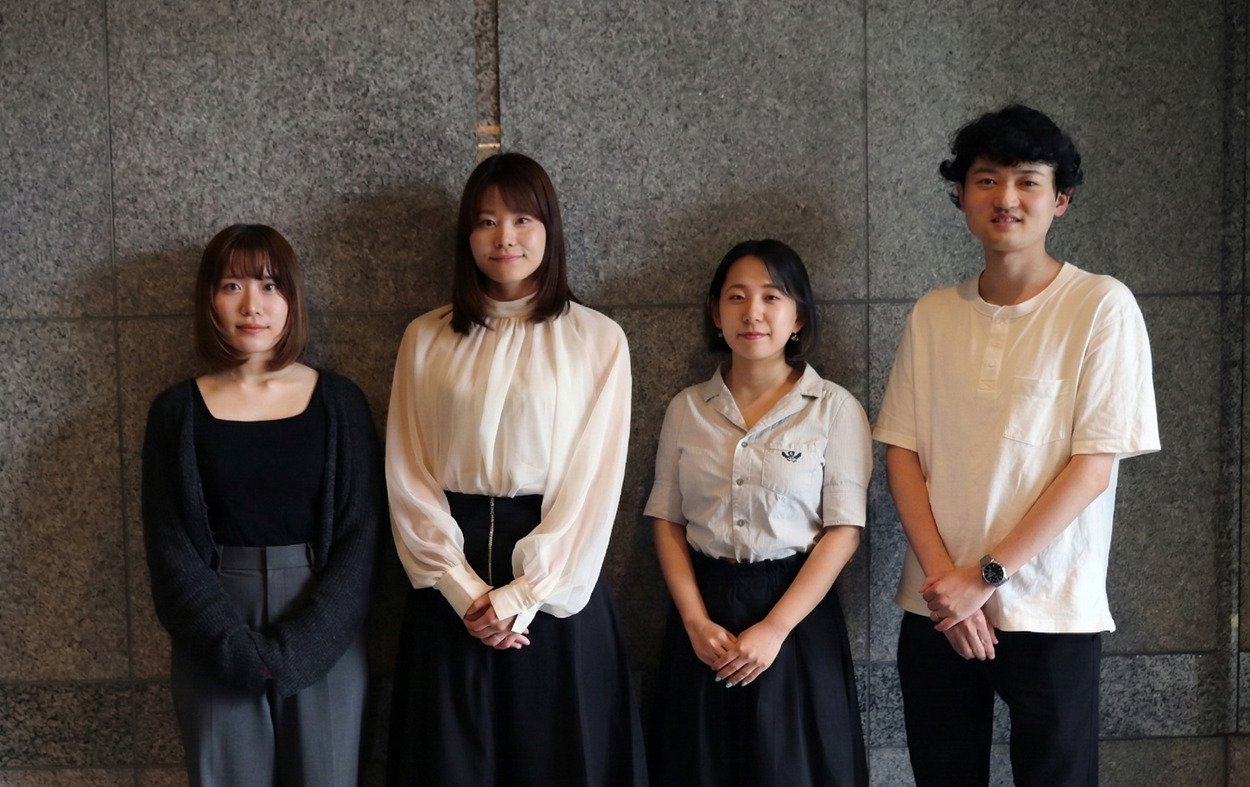
M.A. and M.I. attending a training session
What did you learn from the training?
I think that I was able to acquire basic IT and accounting knowledge, which is a prerequisite for business operations, as well as the ability to think for myself.
As I mentioned earlier, learning IT and accounting knowledge was all new to me, so I had to think for myself about how to deepen my understanding and how to make the knowledge my own.
In the Stage 2 training, there were opportunities to ask questions during assignments, and I always tried to organize my level of understanding and think about how to ask questions in a way that would lead to the solution I was looking for. I always tried to organize my understanding and think about how I could ask questions that would lead to the solution I was looking for.
Through these experiences, I believe that my "ability to think for myself" has become stronger than it was before I joined the company.
I think I can learn some things about computers used in my work, even though they are very basic.
I have had a lot of experience in the service industry and have not had many opportunities to even use a PC at work, so I am learning from scratch, for example, shortcut keys (laughs), which are really basic things that can be used to improve efficiency in both my work and private life.
Also, I was watching my peers asking questions to the instructor, and I felt that I was not asking as many questions as others. Although I was able to solve the problem in my mind, I was sure that I would get more reliable information back and a deeper understanding if I asked questions. I was stimulated by seeing other colleagues eagerly asking questions. Since then, I have been actively asking questions after clarifying my own level of understanding and key points.
From the standpoint of an instructor, are there any points that you are aware of when supporting trainees?
Since each of the trainees has a different character and progress in catching up on knowledge and assignments, I wondered how I should address each of them to make them resonate with each other. What kind of advice should I give to each person to help them grow? I am conscious of giving advice to each person with a great deal of thought given to how it will resonate with them and lead to their growth.
Therefore, I try to grasp each individual's situation by carefully observing what they say in individual one-on-one interviews and at overall progress checks, as well as their daily efforts in training.
As an instructor, do you notice any changes in the participants, M.A. and M.I.?
Yes, that's right. First of all, from the beginning, I thought that both of them had very different characters (laugh), but they shared the same high level of motivation.
I think M.A. has an outspoken personality by nature, so I think she has been flexible enough to absorb the advice of the instructor and put it into practice.
There were times when she struggled at certain stages, such as the phase where she actually moves her own hands, but I could see that she was gradually gaining the ability to absorb and implement what she heard.
M.I. was a natural character from the beginning (laughs), and he enjoyed the training very much and was extremely positive about it every day.
As someone who was involved in designing the training, I feel that this is an ideal sentiment, and I am very happy about it first of all, but I think the point and timing of asking questions to the instructor gradually improved while enjoying the training, which is a point where he has grown.
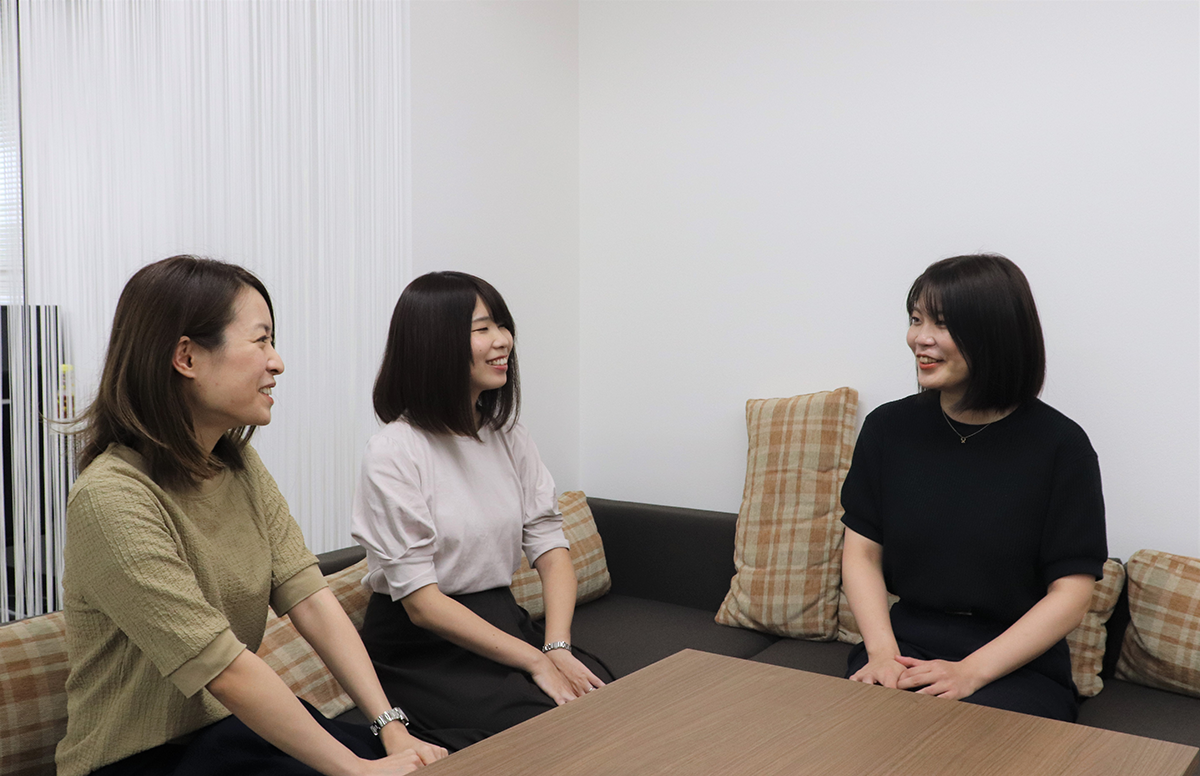
To the two new employees, how do you feel about joining Works Applications?
The step-up training I am taking now is being conducted in parallel with my practical work, so there is a clear separation between the time I spend 100% on practical work and the time I spend 100% on training assignments.
I am grateful for the warmth of the people around me, who are understanding and consider the number of man-hours and resources available for practical work, taking into account the number of man-hours required for the training.
I think it is because of this kind of environment that I am able to work with a strong determination to "make it through the rest of the training.
As for the atmosphere of the company as a whole, I feel that I can freely express my opinions and that it is a comfortable working environment.
I am not bothered by human relations at all, and I am excited to work with my seniors every day! I am told by my seniors, "Don't keep things you don't understand to yourself," so I think there is an atmosphere in which it is easy to ask for advice or ask questions.
I am also happy to know that my salary goes up every time I pass a stage of training. (Laughter)
We are waiting for your colleagues to take the first step into IT career with you.
Please give a message from the two new employees to the job seekers reading this interview article.
Like myself, I think there are people who are interested in changing careers in the IT industry but are put off by their lack of experience, or people who are anxious about changing careers.
At our company, even if you have no IT experience, our seniors are ready to support you, and in the "step-up training," you will probably receive training together with your peers who also have no IT experience.
I think it is a reassuring environment where you can work together with your peers in the same situation and encourage each other. If you are not sure about changing jobs in the IT industry, I hope you will consider us as one of your options as a company where you can start with confidence even if you have no IT experience.
I also feel that our company warmly welcomes people with no IT experience.
I think it takes a lot of courage to take the first step from no experience, but I believe that step will be for your future, so let's take it together and work hard.
Lastly, please give a message to the job seekers reading this interview from your perspective as a person involved in training management.
The IT industry is a rapidly changing industry, and new knowledge and skills are emerging one after another.
In order to continue my efforts to learn IT in such an environment, I believe that I need to have a sense of purpose as to what I ultimately want to achieve by using the means of IT.
That is why I believe that those who can continue to make efforts with a clear intention of why they want to learn IT knowledge and skills and why they want to work in the IT industry, as well as those who enjoy learning in itself, will be able to grow significantly through step-up training and work.
If you have the enthusiasm to "break through all the stages! I look forward to working with such people with the enthusiasm of "I'm going to break through every stage!
Pick up! ★
Kumamoto Office, a leading base for new ways of working
The Kumamoto Office is a leading center for the "new way of working" in our company, isn't it?
Yes, that's right. That's right.
The features of our company are "partial relaxation of side jobs" and "introduction of a three-day and four-day workweek.
These systems are designed to enrich the lives of our employees by exposing them to diverse values in a wide range of fields beyond the scope of our IT business.
The Kumamoto office is a leading center for implementing "new ways of working" and offers a variety of work options.
The Kumamoto Office's way of working
To the two new employees, is there anything else that you feel is attractive about the way you actually work?
In common with all offices, the most common is probably telework work. Currently, I come to the office once a week, but other than that, I basically telework from home.
Since I had to come to the office every day at my previous job, I feel that I can now use my time more efficiently by reducing the amount of time I spend commuting.
Also, this is not limited to the Kumamoto office, as we have a full 2-day weekend and an environment that allows us to take paid holidays (average paid holiday rate for all employees: 82.8%), so I can take my days off to refresh myself.
I think the same way.
Teleworking has lightened my commuting burden. I think I am able to make effective use of my morning time, commuting time, and time after work.
In addition, our company has always had a good maternity and paternity leave system, and I feel that we are a company that understands child-rearing from looking at the way our employees work. M.A.: I am very happy to see that the company has become more supportive of childcare.
*There are some positions that do not allow telework due to the nature of the work.
Information in this article is current as of the date of publication.

Profile
Customer Support
(Works Applications Enterprise, Inc.)
M.I. (in training) / M.I. / M.A. (in training) / M.I. New graduate joined the company in 2017
After gaining experience in the development department, I currently belong to the customer support department of Works Applications Enterprise. While being in charge of support operations for customers using our products, I am also involved in training operations as an instructor for the "step-up training system.

Profile
Customer Support (in training)
Works Applications Enterprise Co.)
M.A. (in training) Joined the company in mid-career in 2022
Previously, she worked at a call center. She is currently taking on the challenge of the step-up training program with no IT experience.

Profile
Customer Support (in training)
(Works Applications Enterprise Co., Ltd.)
M.I. (in training) / M.I. / M.A. (in training) / M.I. Joined the company in mid-career in 2022
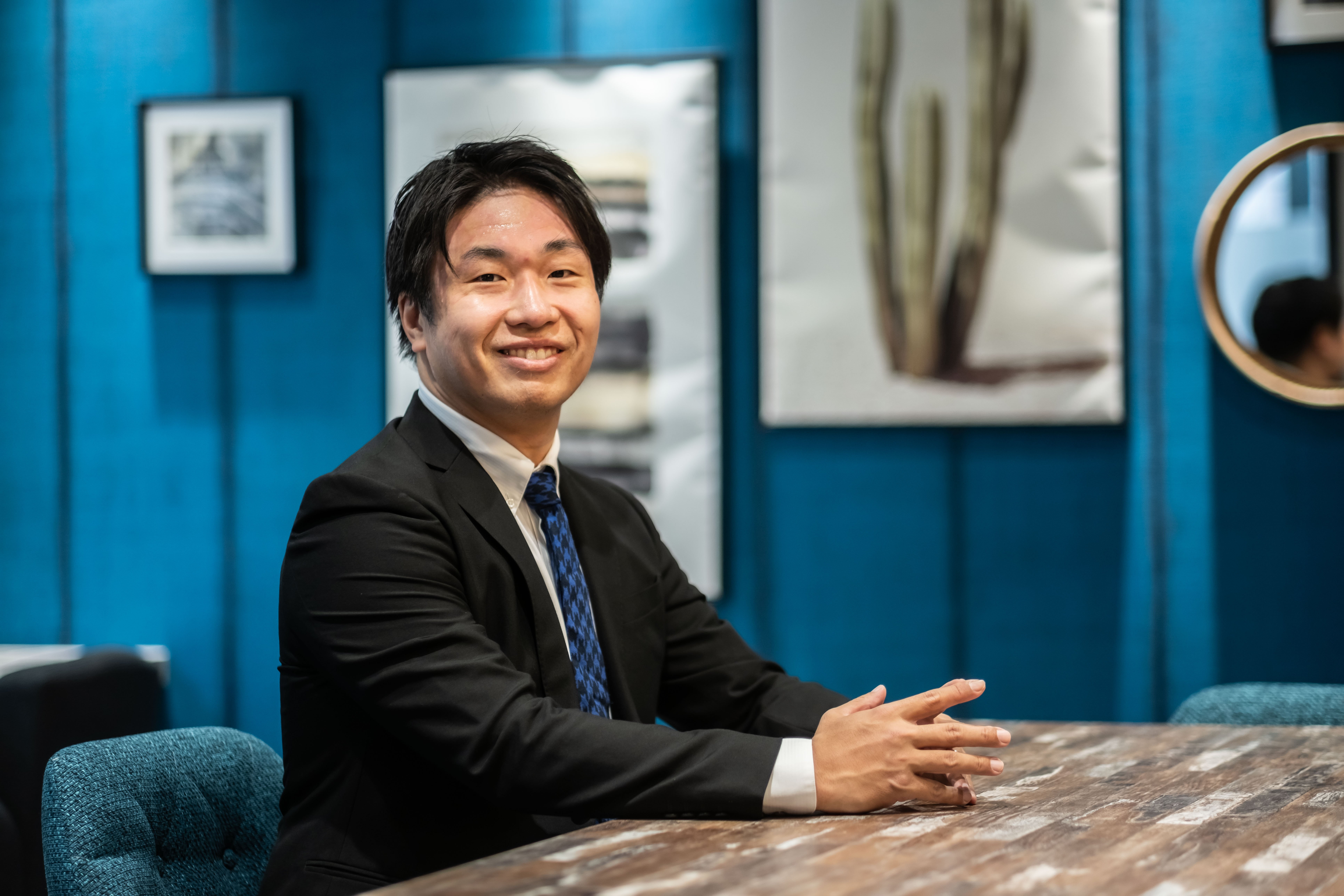
He joined us because he wanted to work in the IT industry in general, and is now challenging step-up training from his previous experience in IT.
Interviewer: M.S., Human Resources
Related Articles
Consultant
A HUE Evangelist Speaks: The Journey of a Product That Continues to Evolve and Exceed Customer Expectations, and the Challenges Faced by Employees Shaping the Future
S.M. / Y.M. / S.S. Recent Graduates
Consultant / Development / Development
Consultant / New graduate
Consultant
Young employees who chose to work the way they want to work.
T.H. / M.S. / N.Y. / M.U. / Y.T.
Customer Support / Engineer / IT System Support
Consultant
Consultant
HUE Evangelist talks about the concept and appeal of HUE
H.S. / New graduate joined in 2005
Customer Success Div.
Consultant / New graduate / Male