
Consultant / Engineer
A HUE Evangelist Speaks: The Journey of a Product That Continues to Evolve and Exceed Customer Expectations, and the Challenges Faced by Employees Shaping the Future
Profile
Consultant / Development / Development
S.M. / Y.M. / S.S.
Published: June 17, 2026
New Graduate
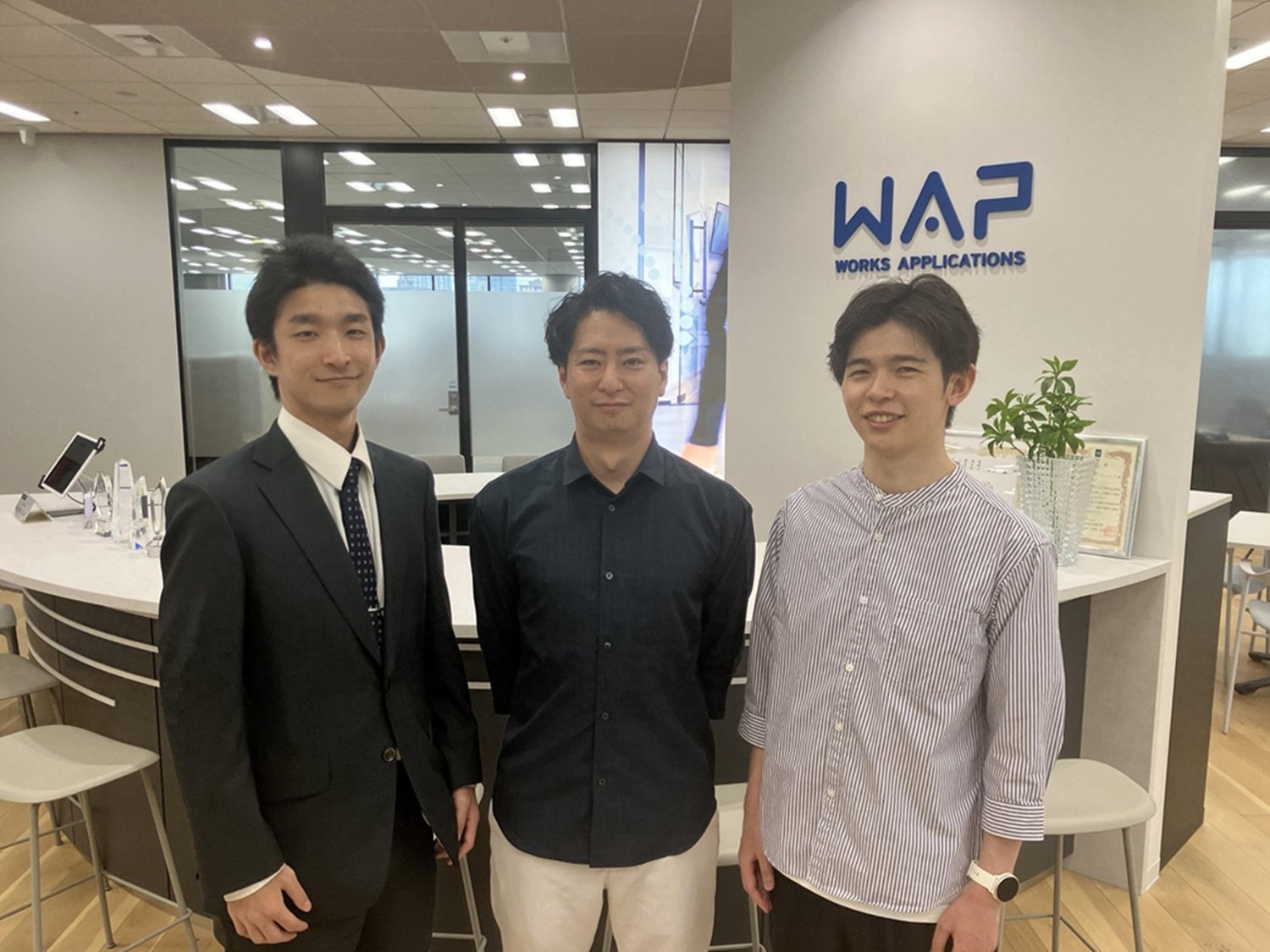
In this article, we spoke with three team members who support our flagship product, “HUE,” from different perspectives, focusing on the growth strategy of “HUE”—an ERP package software that walks alongside our customers.The three individuals featured in this article are “HUE Evangelists” who support the product’s evolution by listening to customer feedback every day and promoting the benefits of “HUE” to the outside world.
We explore how “HUE” has responded to customer feedback and societal changes, and take a closer look at the future envisioned by the employees driving the product’s evolution.
(For more on the HUE Evangelist Program, HERE )
An “environment where you can take on challenges”—a conviction I gained through an internship.
What were your reasons for joining Works Applications?

It all started with an internship I participated in at this company during my college years.
During the internship, I took part in a program that pushed me to think deeply. I was particularly impressed by the employees I worked with—they never compromised, even with students, and provided feedback that sharply cut to the heart of the matter.Rather than simply giving me the correct answer, they probed deeper by asking, “Why do you think that?” and “Does that truly address the root of the problem?” This forced me to confront the shallowness and naivety of my own thinking, and while it was frustrating, it was also a tremendous learning experience. My conviction that I could grow from a young age in such an environment was the deciding factor in my decision to join the company.

Like Y.M., my decision to join the company was also prompted by participating in an internship at Works Applications during my college years.
I remember that, while interacting with employees during my internship, I strongly resonated with the culture of open, flat discussions—unbound by hierarchical structures—and the company’s commitment to getting to the heart of the matter.
Since I didn’t major in computer science and had no programming experience, I was anxious at first. However, many employees at this company joined without any IT experience and are thriving here,and through the internship, I came to realize that “you can acquire specialized knowledge anytime after joining the company. What’s important is the attitude of taking on challenges with critical thinking and initiative.” My conviction that I, too, could take on this challenge from scratch in this environment was the reason I decided to join the company.

Like Y.M. and S.S., participating in the company’s internship program was what led me to join the company.
During the internship, I worked on a hands-on program that required me to think things through thoroughly—an experience I’d never had at other companies. There were many instances where employees provided serious, long-term feedback, and I could feel my critical thinking skills improving. Realizing that “this is an environment where even young employees can grow as much as they put their minds to it” is what made me strongly want to work here.
Why do customers choose the ERP package software “HUE”?
To begin with, what exactly does the term “ERP” refer to?
ERP is a core system that consolidates various business data from across the company, bridging the gap between management and the front lines.
By integrating information—such as accounting, human resources, and procurement—that is typically managed separately, it becomes possible to grasp the company’s overall situation in real time. As a result, management can make decisions—such as “What is happening right now?” and “What steps should we take next?”—more accurately and swiftly.
I believe ERP is not merely a tool for improving operational efficiency, but rather the foundation that supports a company’s decision-making.
What do you consider to be the appeal and strengths of the “HUE” product?
I believe the reason “HUE” is chosen lies in its “wealth of features,” which make it a good fit for companies in any industry.
In fact, the clients I work with—including educational institutions, travel and tourism companies, manufacturers, and financial institutions—all have vastly different business structures and operational policies, yet they are able to use the system as-is without having to customize it for their specific needs.
Furthermore, while “HUE” can cover integrated business processes across the entire company, it also allows for partial implementation in specific areas—such as “starting with expense reimbursement only.” The ability to adapt to client needs regardless of industry is a major strength, and I personally experience the value of this every day as I work directly with our clients.
I, too, believe that the appeal of “HUE” lies in the fact that it can be implemented “without customization” (i.e., without having to rebuild it from scratch for each client). With many systems, it is necessary to add custom features to align with the implementing company’s specific workflows. In such cases, not only does implementation take time and money, but maintenance costs—such as updates required when laws change—also tend to be high.
In contrast, “HUE” comes equipped with features that can handle a wide range of business operations out of the box, allowing for implementation without additional development. This shortens the implementation period and reduces both initial and ongoing costs.
The greatest strength of “HUE” is that all updates—including those required by legal amendments and other regulatory changes, as well as functional improvements—are provided through “free version upgrades” (feature updates at no additional cost). Tax and accounting rules change frequently, but with typical systems, modifications to accommodate these changes incur one-time costs each time.With “HUE,” all such updates are covered within a fixed annual support fee, eliminating the anxiety of not knowing “how much it will cost in the future.”In fact, “HUE” has responded swiftly and reliably to frequent legal and regulatory changes, such as compliance with the Electronic Bookkeeping Act and the invoice system. As a result, many customers have continued to use the product for over 10 years, making it a solution that has earned long-term trust.
Furthermore, “HUE” is developed with an unwavering commitment to the “user’s perspective.”
For example, even regarding the position and size of a single button, we thoroughly discuss “who” will use it, “what information they will be viewing,” and “how they will operate it,” pursuing a design that precisely meets the intended purpose. We don’t settle for “because other companies do it that way”; in our development process, we constantly ask, “Why should it be designed this way?”
I strongly believe that through a series of meticulous development efforts, “HUE” has become a product that delights our customers.
A commitment to solving fundamental problems. How our dedication is put into practice.
What are your specific responsibilities?
I serve as an Account Manager. My role involves maintaining regular communication with existing clients and leading efforts to support their use of the product and resolve their business challenges. I listen to client requests, collaborate with internal teams to drive product improvements, and propose solutions to the business challenges our clients face.
As a Product Owner (the person responsible for determining the overall direction of the product), I set priorities for feature development and, while collaborating with multiple departments—such as Sales and Consulting—I am primarily responsible for making decisions regarding the overall direction of the system.
While we value clear role definitions, our company has a culture of thinking from the perspective of “what is needed to achieve a better solution.” As a result, we are naturally expected to take the initiative and go beyond departmental or role boundaries as the situation requires. Typically, communicating with clients is the responsibility of the sales or consulting departments, but when necessary, we in the development department also handle these interactions.For example, when adapting to legal amendments regarding the invoicing system, many ambiguities emerged as we proceeded with defining the functional requirements. Consequently, the development team decided on its own to “hear directly from our clients” and visited their sites to conduct interviews. As a result, we were able to gain a deep understanding of the background of the system and the practical challenges involved, which led to a functional design that better reflected real-world conditions.
I believe that our unique strength lies in our ability to act flexibly, without being constrained by our roles, always focusing on the question: “How can we best solve problems for our customers?”
Please tell us what you keep in mind during the development of “HUE.”
We do not simply implement customer requests into the system exactly as they are.
For example, when a client says, “We’d like to add this feature,” we first take the time to ask, “Why is that necessary?” and “What is the real problem you’re facing?”It’s similar to how a doctor doesn’t simply prescribe medication based on a patient saying, “I have a headache,” but instead asks about their lifestyle to identify the root cause. After considering various approaches, we often end up proposing a solution that’s completely different from what the client initially envisioned.
I believe that this approach—focusing on “identifying the real challenge and delivering the most valuable solution” rather than simply “building exactly what we’re told”—is what fosters a deep relationship of trust with our clients.
Here’s an anecdote that clearly illustrates the “approach of addressing the real challenge” that S.S. mentioned.
Every day at the company, tasks such as reimbursing employees for travel expenses they’ve paid out of pocket and processing payments to business partners arise. For these procedures, the standard process involves attaching documents such as receipts and invoices, after which a supervisor verifies that the information is correct and grants approval.
One client requested that we add a checkbox labeled “I have reviewed the file” to the approval screen. The underlying issue was that there were instances where approvals were granted without thoroughly reviewing the attached documents.Adding a checkbox is not difficult in itself, but we decided to dig deeper into the question of “why aren’t people checking the documents?” Through repeated interviews, we identified practical issues such as “opening files is a hassle,” “it’s hard to know what to check,” and “I don’t want to spend time on small-amount requests.”
In other words, the real problem lay not in “failing to review” but in “the system itself, which makes it difficult to review.” What would happen if we simply added a checkbox? It would likely just lead to more superficial reviews without any fundamental improvement. With this in mind, we chose a different approach.
First, we implemented a “preview feature” that allows users to verify the contents without opening the file.Furthermore, we added a “feature that automatically verifies” whether the requested amount matches the amount on the receipt, making it clear at a glance where to check. In addition, for small-amount requests, we even proposed “revising the supervisor approval workflow from the ground up,” addressing the feedback from the front lines that they didn’t want to waste time.
Our goal is not simply to “build exactly what we’re told to.” It is to identify the underlying issues and resolve them in the best possible way.
Please share a memorable story where your dedication to “HUE” was recognized.
One project that stands out in my memory is our response to the major legal reform known as the “Invoice System.” When this system went into effect, it was expected that the burden on accounting staff would increase exponentially, as they would have to change the way invoices were processed for each business partner. In response, we developed a feature that allows the system to automatically identify business partners and perform all necessary processing in a single batch.
We received numerous comments from clients, such as “It was a huge help to automate these complex processes” and “The man-hours required to comply with the new system were significantly reduced.”
I am truly delighted that the features our developers meticulously implemented in response to this regulatory change were so highly appreciated by our customers.
We developed this feature with the goal of reducing the burden on frontline staff as much as possible. To minimize changes to existing workflows, we listened closely to our customers’ requests and sought the optimal operational approach for the entire company. As a result, we have received feedback stating, “Even after the new regulations took effect, we’ve been able to operate the system without placing a significant burden on frontline users.”
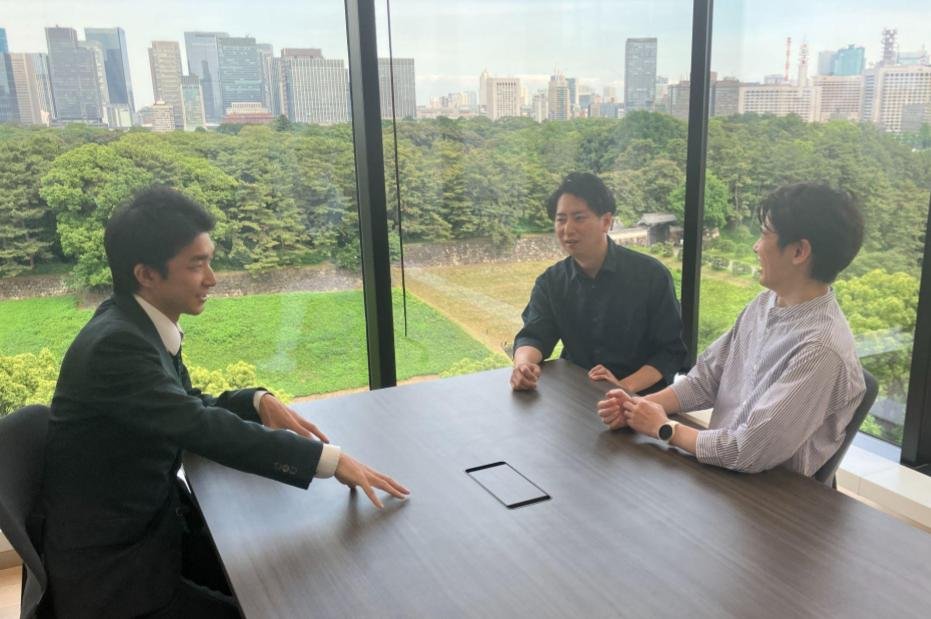
The ever-evolving ERP package software “HUE”
How do you think the ERP package software “HUE” should grow in the future?
I believe that “HUE” should continue to evolve into a product that is even more “user-friendly for the customers who actually use it.” To achieve this, I want to continue serving as the point of contact for our customers, deeply exploring “what kinds of challenges they face” and accurately communicating “what solutions we can provide” to address them.
As an account manager, I believe that by increasing the frequency of communication with customers and building trusting relationships, I can uncover potential issues that the customers themselves may not even be aware of.
I want to help “HUE” grow into the “most compelling option” when compared to systems from other companies.
To achieve this, it is essential to continuously enhance the standard features already built into “HUE”—based on its development philosophy of “no customization”—so that customers can handle all their necessary business operations within the system.
Personally, I do not want to limit my role to just writing code; I aim to contribute to the company beyond the confines of a typical development position—for example, by leading efforts to comply with legal revisions or by seeking out development ideas that can lead to press releases and thereby contribute to public relations activities.
In July 2025, we released a new version of our ERP package software, “HUE,” and developed our first feature incorporating generative AI.
Initially, there were concerns such as, “Is generative AI really a good fit for an accounting system?” However, through trial and error during development, we were able to create features that dramatically improve operational efficiency. Going forward, in addition to further developing features that incorporate generative AI, we plan to evolve “HUE” even further by exploring the use of AI agents.
Learning comes from overcoming challenges
Please tell us about the skills you feel you’ve acquired at our company and the type of talent needed in the coming era.
What I feel I’ve particularly developed while working at this company are a “positive attitude toward work” and the “ability to think and act proactively when faced with problems.” There are many positive-minded colleagues around me, and I’m able to tackle my work every day while drawing inspiration from them.
I believe that what will be needed in the years ahead are “people who can enjoy their work.” I feel that those who can embrace changes in their environment and circumstances with a positive attitude and adapt flexibly are the ones who can create the most value.
Precisely because our work is challenging, I’ve naturally developed a positive mindset that says, “We’ll figure it out.” Since there isn’t always a clear-cut answer from the start, we can’t move forward unless we first believe we can do it and take action. In the process, when I’ve hit a wall I couldn’t overcome on my own, I’ve also developed the mindset to proactively involve those around me and take the initiative.
I feel that what will be required in the coming era is “people who can identify challenges on their own and devise solutions.” While generative AI continues to improve operational efficiency, the ability to pinpoint what the problem is and figure out how to solve it remains a critical domain that only humans can handle.
As S.M. and S.S. mentioned, I truly feel that “problem-solving skills” will become increasingly important in the future. We are entering an era that demands the ability to grasp the essence of a problem and lead it to a solution in a positive and swift manner.
Delving deeply into the challenges at hand, identifying their core, and guiding them toward a solution with a positive attitude—I believe that this ability remains in constant demand, even in today’s rapidly changing world.
For those of you who want to hone your problem-solving skills. We look forward to welcoming you to an environment where you can grow tremendously.
Do you have a message for job seekers reading this interview?
I believe our company offers an excellent environment for those who enjoy thinking deeply about issues and want to take the initiative in solving problems.
It’s a place where you can enjoy growing professionally alongside colleagues who are always ready to take on new challenges with a positive attitude. We’d be delighted if you’d join our team.
I feel that once you join our company, your “problem-solving skills” will naturally be honed (laughs).
One of the biggest draws is that by working on socially significant projects—such as adapting to legal reforms—you can truly feel yourself growing every day.
It’s not an easy environment, but I think it’s the perfect place for those who want to grow while enjoying the challenge.
Our company offers an overwhelming number of opportunities to take on challenges. Personally, ever since I joined, I’ve gained immense inspiration and learned a great deal by working alongside talented colleagues.
If you’re aiming for extraordinary growth or looking to further hone your “problem-solving skills,” I encourage you to apply for an internship or go through our recruitment process.
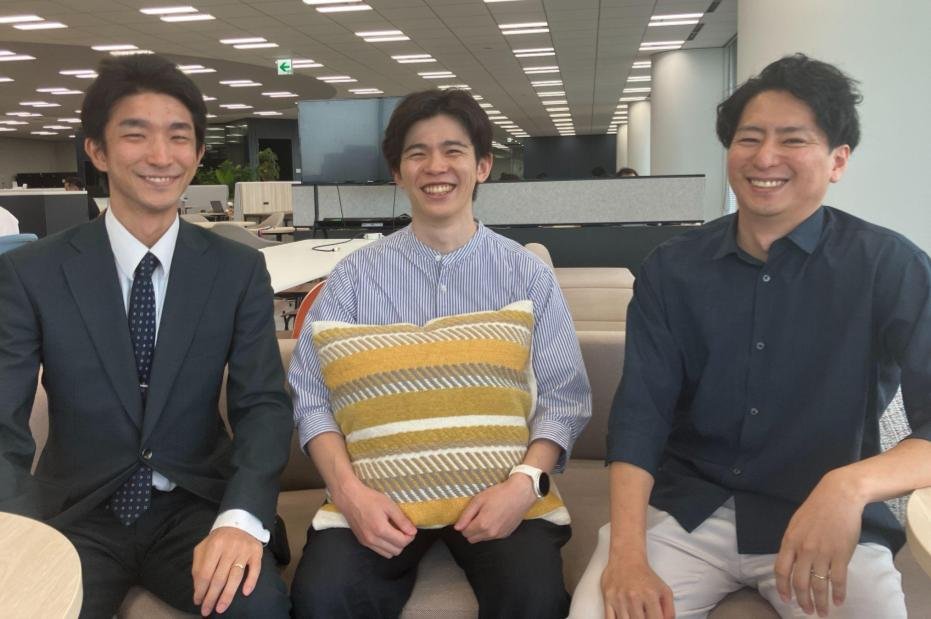

Profile
Account Manager
S.M. New graduate joined the company in 2017
After joining the company, I worked on the development of “HUE” in the development department. After that, I worked on the customer support team, and since 2023, I have been responsible for client relations as an account manager. Through regular meetings with clients, I work to identify and resolve issues.

Profile
Development
Y.M. Joined the company in 2010
For the 16 years since joining the company, I have consistently been involved in the development of the ERP package software “HUE.” Currently, as the development lead for the accounting system “HUE AC,” I am responsible for formulating product strategies and development plans, as well as leading the project to integrate generative AI into “HUE” as a standard feature for the first time.

Profile
Development
S.S. Joined the company as a new graduate in 2018
He specializes in the development of the fixed asset management system “HUE Asset.” He is involved in a wide range of activities, from feature development to user support, and proposes improvements and implements solutions based on the needs of the field.