
Web Articles Other
2022/05/24
What kind of project is WBS suitable for? Creation procedure is also explained.
Identification of work processes and tasks is the basis of project management, and any omissions will have a significant impact on the progress of the project. There are various methods for identifying tasks, and one of the most common methods is called WBS. In this article, we will explain in detail what kind of method WBS is, which projects WBS is suitable for, and the procedure for creating WBS.

Table of Contents
What is WBS?
WBS is an abbreviation for "Work Breakdown Structure. As the name implies, it is a method (in the form of a task table) to subdivide project tasks into smaller pieces and present them in a structured manner.
Various tasks exist to accomplish a project, and the type and number of tasks differ depending on the work process and phases. When deciding who should be assigned which task, it is first necessary to subdivide and pick up the tasks.
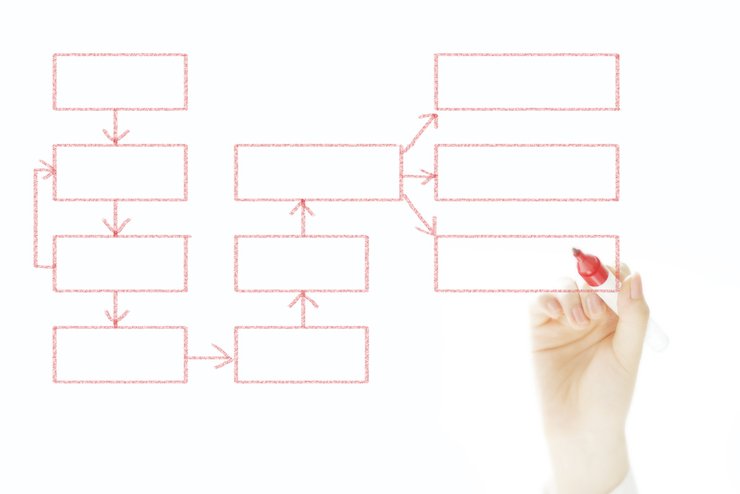
Therefore, in WBS, a rough work process is subdivided into detailed work processes, which are then described in a tree-like form. Since the steps are broken down from large processes to small processes, it is difficult to leak out tasks.
WBS is an effective management method for properly managing projects and eliminating omissions in task execution.
Merits and Cautions of WBS
There are various project management methods other than WBS, but what are the advantages of using WBS? We will also explain the points to keep in mind.
Advantages of WBS
Preventing task omissions
There are cases where task omissions occur during the planning stage of a project and are noticed while the project is in progress. If such a situation occurs, the project may not be able to proceed as initially planned, and it may be halted in the middle of the project or rework may occur.
Using WBS has the advantage that tasks can be picked up without omission in the planning stage, preventing rework of the project. WBS can also be used to accurately estimate man-hours.
Accurate man-hour estimates are possible.
If task omissions occur during the planning phase of a project, the man-hours initially estimated will be affected. For example, there may be a case where a task was initially estimated to be executed in 10 days but must be extended by another 5 days due to the discovery of a new task.
Using WBS prevents task omissions in the planning and estimation stages, and thus has the advantage of accurately grasping the man-hours required for each phase. This has the advantage that the number of man-hours required for each phase can be accurately grasped.
Schedule prediction is possible
In addition to identifying tasks and estimating man-hours, schedule prediction is essential in the project planning phase.
By developing the tasks identified by WBS into a Gantt chart, the schedule for each task can be planned.
Points to note about WBS
WBS is not only beneficial WBS is not only beneficial, but there are also some points that need to be taken into consideration when operating it.
To begin with, WBS is used in the planning phase before the project starts. For example, there may be cases where requirements are changed or added after the project starts. In such cases, the initially planned tasks may increase or decrease, and if they are not reflected in the WBS, the progress of the project will be hindered.
Therefore, it is important to always check for any increase or decrease of tasks in the project and reflect it in the WBS.
What kind of project is WBS suitable for?
There are various ways to proceed with a project, and there are management methods and tools suitable for each. What kind of project is WBS best suited to manage?
As mentioned in "Points to Note about WBS," WBS is often used to identify tasks in the planning phase of a project. Therefore, it is suited for projects such as waterfall development, where tasks and schedules from upstream to downstream processes are strictly identified at the stage before the project starts, and the project proceeds as planned.
However, it is rare for a project to proceed smoothly as planned, no matter how carefully planned. Therefore, it is important to remember to periodically review the WBS based on the assumption that there may be changes in specifications or delays during the course of the project.
Procedure for Creating WBS
What steps should be taken when actually planning a project using WBS? In this article, we will break it down into four processes.
(1) Setting project goals
First, define the goals that the project aims to achieve. For example, in the case of system development, the goal may be delivery of deliverables or service-in.
2) Identification of tasks
Once the goal of the project is defined, identify what tasks are necessary to achieve it. Thinking along the flow of the project will help you efficiently identify the necessary tasks.
Since it is never easy to identify necessary tasks from scratch, it is also effective to refer to what tasks have been executed in past projects.
In addition, there are project management tools that can handle a variety of methods, including WBS. Selecting a template according to the type of project will make it easier to pick up the necessary tasks, so make good use of it.
(3) Structuring tasks
Once the tasks have been identified, they should be structured. Since tasks are scattered throughout the work process and phases, let's first organize them in chronological order.
Even if you think you have identified all the tasks without omission, it is not uncommon to discover omissions when you structure the tasks and look at the entire project from a bird's eye view. In addition, some tasks may have overlapping content, which may cause a decrease in work efficiency.
When structuring tasks, it is important not only to organize them in chronological order, but also to consider whether there are any related tasks.
④Double and triple checking
Once the project manager and others have identified and structured the tasks, be sure to have other members of the team check the tasks and verify that there are no omissions. The project manager is in a position to oversee the entire project, and may not be able to grasp the detailed tasks at each site.
Therefore, by having the leaders and managers of each department look over the WBS, a highly accurate WBS can be expected.
Create a Gantt chart based on WBS
After tasks are identified and checked, a Gantt chart should be created based on the WBS, which can extract and structure tasks, but cannot manage schedules in chronological order.
Therefore, by creating a Gantt chart based on the WBS, you can easily visualize the overall tasks and progress, and proceed with the project systematically.
For more information on Gantt charts, please refer to "What is a Gantt chart? What is a Gantt chart, its merits, and how to use it in project management".
Let's streamline project management by utilizing WBS!
WBS is an effective method for organizing project tasks by phase and identifying all of them. Combined with Gantt charts, WBS can also be useful for efficient schedule management and man-hour management.
On the other hand, there is also the burden of periodic reviews to adjust areas that are not progressing as planned. If WBS is managed by hand or using spreadsheet software, it is not efficient because of the time and effort required to revise each time a task is reviewed.
Therefore, to solve such issues, let's consider the most appropriate man-hour management tool in light of your company's projects and development methods.
Our project progress management service, "HUE Project Board," supports a variety of man-hour management methods, including Gantt charts as well as WBS. The intuitive operation method is easy to use, and when changes occur in the plan, it can be quickly modified to reflect the information in real time. It enables close collaboration not only within the company but also with external parties.

Contact us at
here
Related Useful Information
White Paper
Jul. 27, 2022
Key Points for Selecting a Project Progress Management Service

White Paper
2022/07/27
Breaking away from Excel-based progress management

Web Articles
2022/05/24
Tools are useful for creating a WBS! What are the causes of not utilizing tools well?
Related Case Studies
Standardized project management with HUE Project Board
Actus IT Consulting Corporation

Centralized management of R&D themes in the manufacturing industry with HUE CPJ
TDK Corporation