Accounting / Fixed Assets / Purchasing
NITTETSU CHEMICAL & MATERIAL Co.
Replaced a fixed asset system developed from scratch. Contributed to reducing the workload of system and accounting staff
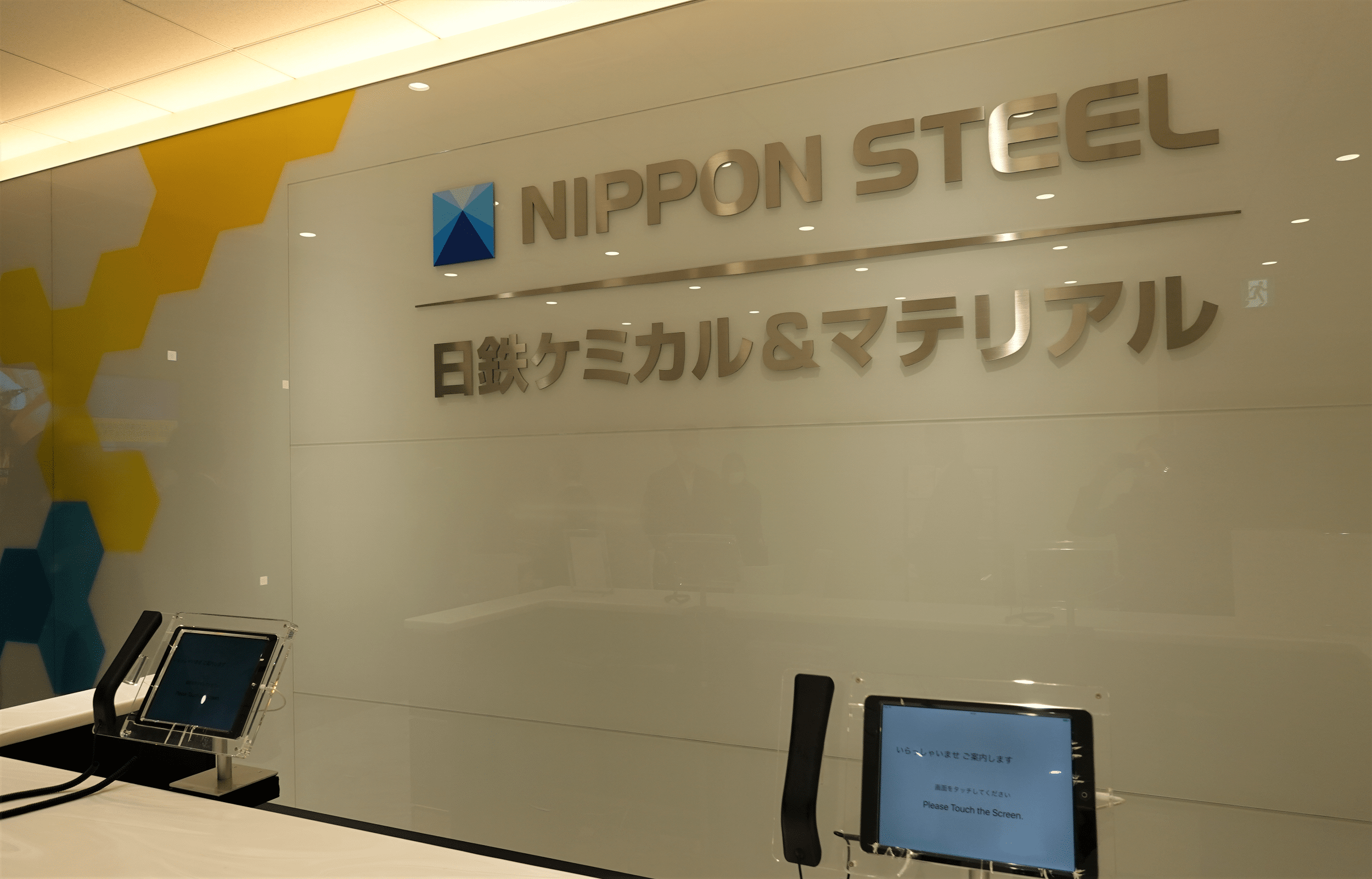

NITTETSU CHEMICAL & MATERIAL Co.
("Nittetsu Chemical & Materials") was formed through the business integration of Nippon Steel Corporation ("Nippon Steel") group companies Nippon Steel Corporation ("Nippon Steel") and Nippon Steel Sumikin Chemicals Corporation ("Nippon Steel Sumikin Chemicals") and Nippon Steel Sumikin Materials Inc, The new company was established in October 2018.
Nippon Steel & Sumikin Chemical has developed its coal chemistry business by utilizing coal tar and coke oven gas, which are by-products generated in the steelmaking process, the core business of Nippon Steel, and has expanded its business into the chemicals and functional materials fields. Nippon Steel & Sumikin Materials has developed and commercialized distinctive products such as semiconductor packaging materials, carbon fibers and composite materials, and catalyst carriers for exhaust gas purification. Through the business integration, the two companies have continued to grow into a company that accurately meets the needs of customers for new products while leveraging the strengths of both companies.
In 2012, NITTETSU CHEMICAL & MATERIALS first introduced HUE Classic Assets Management ("CAM") from Works Applications Corporation ("Works") as its asset management core system to reduce the cost of system management and to achieve DX (digital transformation) of its operations. The company is working to reduce system management costs and achieve DX (Digital Transformation) of its business operations.
In this interview, we asked the members of the IT Planning & Promotion Department of NITTETSU CHEMICAL & MATERIAL, who spearheaded the system implementation, about the background of the CAM implementation, what was important in the system selection process, the current operational status, and future prospects.
Interview participants:
Mr. Shinichiro Kioka (Former IT Planning and Promotion Department / Currently Group Leader, Accounting Group, General Affairs Department, Kyushu Works)
Mr. Koichi Ayabe (Manager, IT Planning and Promotion Department)
Environmentally Conscious Product Creation through Effective Use of By-Products Generated in the Iron Manufacturing Process
-Please give us an overview of your company's business.
Mr. Kioka:
As you can see from our company name, we are a group company of Nippon Steel Corporation, which was established in October 2018 through the business integration of Nippon Steel & Sumikin Chemicals and Nippon Steel & Sumikin Materials. The Company's core businesses are coal chemicals and chemical products, but it also has 13 other businesses, including functional materials and metal foil businesses, covering a wide range of business domains.
In the coal chemical business, by-products of the steelmaking process are effectively utilized to manufacture products. Coal-based carbon materials made from coal tar, a byproduct of the steelmaking process, are used in a wide range of fields, from the semiconductor industry to the automotive and aerospace industries.
In the Chemicals business, we manufacture and sell basic chemicals such as benzene, toluene, xylene, styrene monomers, divinylbenzenes, and raw materials for agrochemicals, etc. Our unique manufacturing processes and raw material composition enable us to supply high-quality products with high cost performance.
Lack of COBOL language developers makes it difficult to maintain the host system...
-First of all, please tell us the background behind the introduction of CAM.
Mr. Kioka:
When the full-scale introduction of CAM began in 2011, I was in the IT Planning and Promotion Department and was in charge of introducing the internal business system. In 2014, after the system implementation was completed, I was transferred to the Kyushu Plant, where I am currently working.
We had been operating an in-house developed system, but at that time it was time to renew the host computer, and it turned out to be quite costly to do so. We were faced with the choice of continuing to use our in-house developed system or introducing a new system to replace it. Under these circumstances, the Business Reform Project, an organization established within the company, identified the restructuring of the business system as one of the issues to be addressed. As a result of our discussions, we decided to introduce CAM because of its superiority in terms of business improvement in that it is easy to maintain.
Mr. Ayabe:
In fact, at the time, I was in charge of development using the language "COBOL" (COBOL), which was used to manage information on all internal operations such as fixed asset management, cash receipts and disbursements, vouchers, and purchasing. We had been using COBOL for more than 40 years since the system started operation, and it was difficult to find system developers who could use the COBOL language.
Even about 10 years ago, there were few programmers who could use COBOL, and it would be a considerable cost burden to continue to secure COBOL-capable personnel just to develop the system in-house. In addition, as system development is not our core business, we are limited in terms of resources to train system developers. Against this backdrop, one of the reasons for the introduction of CAM was the growing momentum that it was time to let go of host computers.
What is important is that the system be easy to use for the end user
-What were the key points you focused on when considering the introduction of a new system?
Mr. Kioka:
When considering the introduction of CAM, we benchmarked about five vendors. We actually asked each vendor to demonstrate their systems and checked each function from the viewpoint of whether it matched our work.
We also focused on the balance of the system as a whole. For example, if fixed asset management, vouchers, and cash receipts and disbursements were all in different packages, it would be easy to imagine the difficulty in integrating interfaces. We wanted to reduce the number of packages as much as possible to reduce the implementation load. Works' CAM met these requirements.
The user interface, including ease of use for the end user, was also an important point. We conducted a series of demonstrations with the participation of not only the system construction department, but also end users from each department who would actually use the system.
-Was there any difference in cost between updating the host system and introducing a new CAM system?
Mr. Kioka:
I think that WORKS' features of "non-add-on" and "non-customization" have resulted in a reduction in system maintenance costs compared to updating the host system. Usually, when a packaged system is adopted, version upgrades are paid for, and it is difficult to estimate the costs incurred in the future. In this respect, Works provides free version upgrades and only incurs a certain amount of maintenance fees, making it easy to calculate running costs. Compared to other package systems, we felt that Works has an advantage in this respect.
Acceleration of business efficiency and automation
-How do you feel about the system after implementation and how is it received by end-users?
Mr. Kioka:
Although I have not been able to listen to all of the feedback from the field because I was transferred after the implementation was completed, I think the ease of input has improved dramatically in terms of the user interface.
In addition, the self-developed system had limitations in terms of data export and other processability, but with CAM, it is easy to export Excel data, and the data can be processed and dropped into the tool, making data processing easier. The workflow function also makes it possible to "visualize operations" from the perspective of internal control, and information that has not been approved is no longer registered in the system. The journal entries for depreciation and increases/decreases, which used to be hand-entered, are now automated in CAM, and I think the accounting staff feels that their work efficiency has improved.
Mr. Ayabe:
From the perspective of the system staff, it has become easier to grasp the results of calculations and tabulations. For example, in the past, when we received requests from end-users for amortization calculations, the system staff would run batches to process them, but with CAM, end-users are now able to calculate and tally the results themselves, which I think has improved work efficiency.
Another major advantage is the linkage with Works' CPM purchasing management system. In the past, the linkage between purchasing management and asset management was manual, but now data entered in CPM can be imported directly into CAM's construction in progress account, which is very helpful because it is automated.
Mr. Kioka:
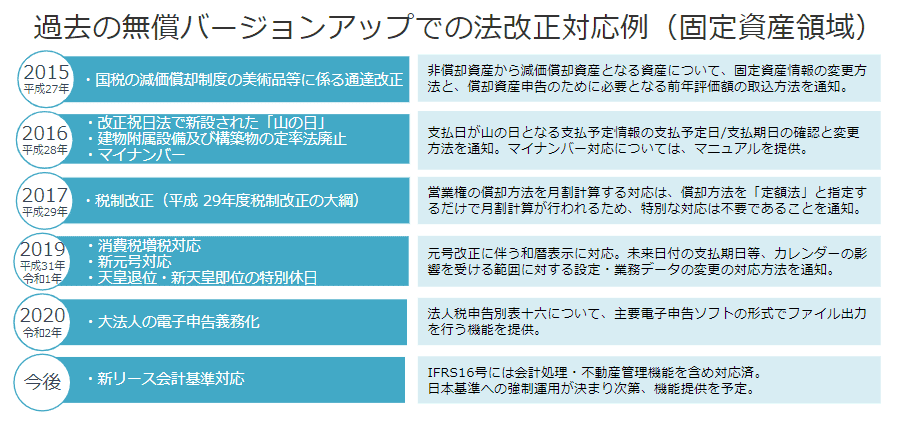
In terms of fixed asset management, we have had no major problems in the past because the company has responded appropriately to each legal revision, such as changes in the depreciation method for building fixtures and structures. We changed our depreciation method from the declining balance method to the straight-line method in FY2020, and the appropriate support has made the transition smooth.
Promoting remote work and further DXing of operations
-What are your requests for WORKS and what are your plans for the future?
Mr. Kioka:
First, in terms of system operation, the registration of fixed assets is drafted by the person in charge on site, and then checked and approved by his/her superior. The accounting staff then performs a final check to complete the registration, but the vouchers that accompany this workflow are currently circulated on paper. We are now considering the possibility of using the Workflow with a function to attach PDF files, etc. We will have to rethink our workflow, including the use of seals, when we introduce the attachment function, but I think it will also help promote remote work.
Mr. Ayabe: We would also like to consider introducing an unused menu for
CAM in the future.
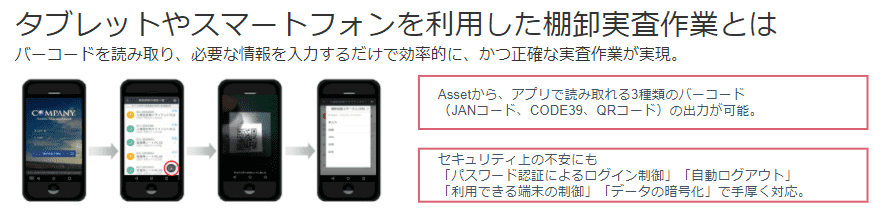
We are currently considering the possibility of using CAM's inventory management function to improve the efficiency of physical physical inspections of fixed assets. However, many of our fixed assets are located in factories where the environment is harsh due to high temperatures and dust, etc. For example, even if a barcode label is attached and a barcode reader is used to read the label, the label itself deteriorates due to heat and dirt, making it impossible to read the label immediately. Mr. Works has told us that there are various examples of using heat-resistant labels or embedding plate-type RFIDs, and reading those labels with a handy terminal, which we would like to consider. Another idea would be to start introducing the system with a limited scope of use, such as using it for inventory items stored in a warehouse with a stable environment.
We are not currently using the leased asset management function, but since we have some leased assets, end users have suggested that we could use the leased asset management function. We are in the process of having Mr. Works explain to us what kind of system the leased asset management function is and what advantages it offers. With the support of Mr. Works, we will continue to make full use of the various functions of CAM to promote further DX in our operations.
-Thank you very much for your time today.
*This article is current as of December 2020.
Related Case Studies
Nankai Electric Railway x WAP talks about the "overwhelming return generated by 'add-on zero ERP'".
Nankai Electric Railway Co.
Nankai Electric Railway introduces HUE DI and upgrades HUE, Building a Management Foundation that Continues to Adapt to Change
Nankai Electric Railway Co.
Inventory preparation man-hours drastically reduced. HUE" in a few hours
Huis Ten Bosch Corporation